
湖南汉寿把秸秆“吃干榨尽” 综合利用率达96.5%Hanshou, Hunan, 'uses up and squeezes out' straw, achieving a comprehensive utilization rate of 96.5%
10月中旬,湖南省常德市汉寿县洲口镇一季稻收割完成。收割机过后,地里留下一行行稻茬;不远处,打捆机沿茬行进,将散草卷成圆柱形草捆。过去让人头疼的“禁烧账”,正在变成农户、企业、村集体都喜欢的“增收账”。
湖南省龙灵秸秆综合利用开发有限公司负责人武中付站在田埂上,拍了拍拖车上的草捆说,这些草捆月底发往云贵川,养殖户等着做垫料、青贮料。公司在洲口镇流转水稻田7000多亩,一季稻和早晚稻秸秆经粉碎、打包后外销,每吨净利100多元;收储范围覆盖汉寿县西湖片区4个乡镇,年收储超3万吨,季节性用工带动周边100多人在家门口务工。
洲口镇太平村党支部书记万善海这两天总是天不亮就下田。村里“村村响”广播早中晚三轮播放政策,镇、村干部按户摸面积、建台账。他给记者摊开账本:应有800亩秸秆离田,已完成200亩;油菜茬1115亩,走粉碎、灭茬、深翻、还田之路;芝麻秆、黄豆壳、湘莲壳和田间杂草,用流动粉碎机就地打碎,再统一运走。他说,做群众工作光靠命令不行,得全方位做好服务,得让他们看见实惠。油菜秸秆还田后,钾、磷等回田,镇农经站测算每亩可减少化肥用量约一成,对改良土壤板结、种植早中稻都有好处;部分低洼、分散地块不便机收,就设临时收储点,派专人清运、统一粉碎压缩。
在罐头嘴镇福兴村,汉寿县鑫富农牧科技开发有限公司的车间里机器不停运转。2020年,公司启用半喂入收割机专收长草——优质长草送入酒厂,每吨售价1000元左右;普通草捆送进车间编草绳、织草帘,年产1000多吨,每吨售价600至800元。草绳发往全国,用作瓷器运输固定和缓冲材料;草帘供向本县蔬菜基地,用作运输铺垫和保温材料。公司负责人张志旺攥着一捆草绳说,别小看这根绳,护的都是值钱货。编剩的短草、碎草做青贮料,年产约2万吨,供牛羊育肥。罐头嘴镇已逐步形成“回收—储存—加工—销售”一体化模式,把过去弃在田边的草变成稳定增收的订单。
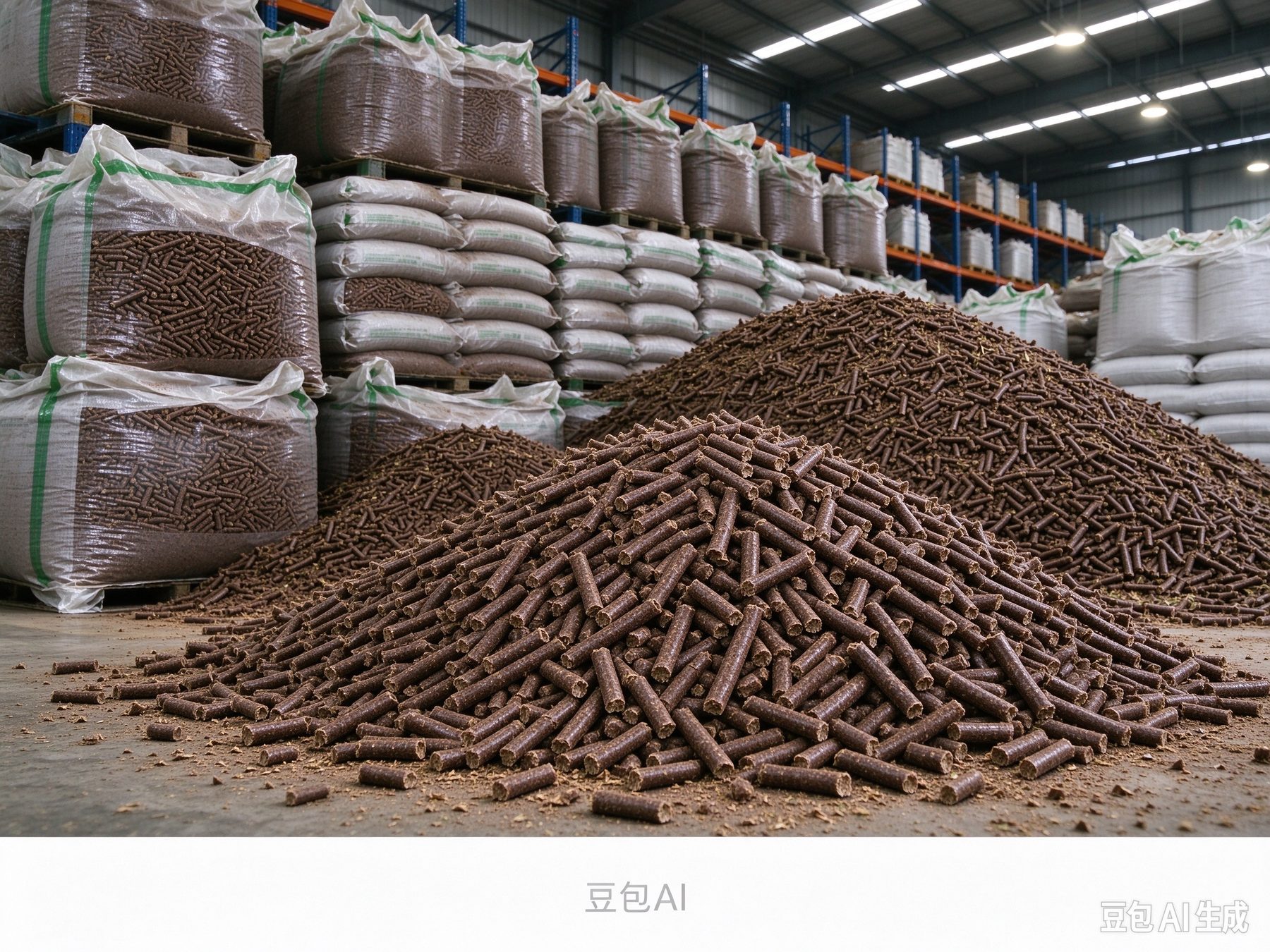
沧港镇胜强水稻专业合作社生产线上,2011年全国劳模、老种粮户胡胜祥正盯着颗粒出料。秸秆打碎、压缩成型,产出深褐色生物质颗粒。“热值稳定在4700大卡每公斤,烟尘小,适合稻谷烘干锅炉和工业供热。”胡胜祥捧起一把颗粒说,这些颗粒硬实,带着草木香。合作社今年计划消化水稻、棉花等农作物秸秆约5000吨,产品供给本地烘干设备、锅炉等,以替代散煤。昔日一把火烧掉的废草,如今变成了硬实耐烧的能源颗粒。
汉寿县农村能源服务中心副主任梅晨雨翻出台账:全县耕地92.3万亩,农作物播种面积198.3万亩,以水稻、油菜为主。2025年全县产生秸秆77.95万吨,可收集56.08万吨,其中水稻秸秆占77.3%;全年利用秸秆54.12万吨,综合利用率96.5%。这背后是肥料化、饲料化、燃料化、基料化、原料化“五化”全链:还田沃土、打捆外调、青贮育畜、制粒供能、编绳做帘。全县专业化作业主体达13家,收储点37个。
为把“收得回、运得出、用得掉”做实,汉寿县近年推出“三七工作法”——对中晚稻秸秆实行约30%打捆离田、70%灭茬还田,局部深翻或灌水腐熟;新增灭茬机、自走式打捆机,对秸秆还田、离田的市场主体给予作业和收储奖补,以政府精准补贴撬动秸秆综合利用市场;新增标准化转运中心和市场主体,形成“乡镇收集、县级转运、园区利用”的闭环。梅晨雨说,今年要实现高值化利用,通过设备升级把每根秸秆“吃干榨尽”。在汉寿,秸秆不再是包袱,而是连着耕地质量、养殖饲料、清洁能源和农民就业的“另一季收成”。
In mid-October, the first-season rice harvest in Zhoukou Town, Hanshou County, Changde City, Hunan Province was completed. After the harvesters had passed, rows of rice stubble were left in the fields; not far away, a baler moved along the stubble rows, rolling scattered straw into cylindrical bales. The previously troublesome 'ban on burning' is turning into a 'revenue booster' that farmers, enterprises, and village collectives all enjoy.
Wu Zhongfu, head of Hunan Longling Straw Comprehensive Utilization and Development Co., Ltd., stood on the field ridge and patted the straw bales on the trailer, saying that these bales will be sent to Yunnan, Guizhou, and Sichuan at the end of the month for breeders to use as bedding and silage. The company manages the transfer of over 7,000 mu of rice fields in Zhoukou Town; after being crushed and baled, the straw from first-season and early/late-season rice is sold externally, earning a net profit of over 100 yuan per ton. The storage coverage extends to four towns in the West Lake area of Hanshou County, with annual storage exceeding 30,000 tons, and seasonal employment brings more than 100 local people work opportunities right at their doorstep.
Wan Shanhai, the Party branch secretary of Taiping Village, Zhoukou Town, has been going to the fields before dawn these past few days. The village's "Village Broadcast" plays policies three times a day—morning, noon, and evening—and the town and village officials are surveying each household's land area and setting up ledgers. He spread out the ledger for the reporter: 800 mu (Chinese acres) of straw are supposed to be returned to the fields, and 200 mu have been completed; 1,115 mu of rapeseed stubble are being processed through crushing, stubble elimination, deep plowing, and returning to the field; sesame stalks, soybean shells, Xianglian shells, and field weeds are crushed on-site using mobile shredders and then transported away in bulk. He said that working with the people cannot rely on orders alone—it requires comprehensive service and showing them tangible benefits. After returning the rapeseed straw to the field, potassium and phosphorus are returned to the soil, and the town's agricultural economic station estimates that fertilizer use can be reduced by about 10% per mu, which is beneficial for improving soil compaction and for planting early and middle-season rice. For some low-lying, scattered plots that are inconvenient for mechanical harvesting, temporary storage points are set up, with dedicated personnel assigned for collection, shredding, and compression.
In Fuxing Village, Guantouzhui Town, the machines in the workshop of Hanshou County Xinfù Agriculture and Animal Husbandry Technology Development Co., Ltd. keep running continuously. In 2020, the company started using semi-feed harvesters to specially collect long grass—the high-quality long grass is sent to distilleries, selling for about 1,000 yuan per ton; ordinary grass bundles are sent to the workshop to make grass ropes and weave grass mats, with an annual output of more than 1,000 tons, selling for 600 to 800 yuan per ton. The grass ropes are shipped nationwide, used as securing and cushioning materials for ceramic transport; the grass mats are provided to local vegetable bases in the county, used as transport padding and insulation materials. The company leader, Zhang Zhiwang, held a bundle of grass rope and said, 'Don't underestimate this rope; it protects valuable goods.' The leftover short and broken grass is made into silage, with an annual output of about 20,000 tons, used for fattening cattle and sheep. Guantouzhui Town has gradually formed an integrated 'recycling—storage—processing—sales' model, turning grass that was once discarded at the edge of fields into stable, income-boosting orders.
On the production line of Canggang Town Shengqiang Rice Professional Cooperative, Hu Shengxiang, a national model worker in 2011 and an experienced grain farmer, was watching the grains being discharged. The straw is crushed and pressed into pellets, producing dark brown biomass pellets. "The calorific value is stable at 4,700 kcal per kilogram, with low smoke, suitable for rice drying boilers and industrial heating," said Hu Shengxiang, holding a handful of pellets, which were solid and carried the aroma of grass and wood. This year, the cooperative plans to process about 5,000 tons of crop straw, including rice and cotton, supplying the products to local drying equipment and boilers to replace loose coal. What used to be waste straw burned in a single fire has now become solid, burn-resistant energy pellets.
Mei Chenyu, Deputy Director of the Rural Energy Service Center of Hanshou County, reviewed the accounts: the county has 923,000 mu of arable land, with 1,983,000 mu of crops sown, mainly rice and rapeseed. In 2025, the county will produce 779,500 tons of straw, of which 560,800 tons can be collected, with rice straw accounting for 77.3%; the annual utilization of straw will be 541,200 tons, with a comprehensive utilization rate of 96.5%. Behind this is the full chain of the 'five transformations': fertilization, feed, fuel, base material, and raw material: returning to fertile soil, baling for external transfer, silage for livestock, pelleting for energy supply, braiding for ropes and mats. The county has 13 specialized operation entities and 37 storage and collection points.
In order to make the principle of 'able to be collected, transported, and used' practical, Hanshou County has recently launched the 'Three-Seven Work Method' — implementing about 30% of bundling and removal of mid-to-late rice straw from the field and 70% of straw crushed and returned to the field, with localized deep plowing or water decomposition; introducing new stubble eliminators and self-propelled balers, and providing operation and storage incentives to market entities for straw return and removal, using precise government subsidies to leverage the comprehensive utilization market of straw; establishing new standardized transfer centers and market entities, forming a closed loop of 'collection at township level, transfer at county level, and utilization in industrial parks.' Mei Chenyu said that this year, the goal is to achieve high-value utilization, making every straw stalk fully used through equipment upgrades. In Hanshou, straw is no longer a burden, but rather 'another harvest season' connected to farmland quality, livestock feed, clean energy, and farmers' employment.
[Source: Changde Daily]
[Editor: Xiao Neng]
本网站摘录或转载的属于第三方的信息,目的在于传递更多信息,内容仅供参考。相关股票、投融资等资讯及分析并不代表本网站赞同其意见和对其真实性负责,不构成投资建议。
若不慎涉及侵权,请在相关内容刊发之日起 30 日内联系我们,我们将第一时间进行删除处理。
转载本网资讯请注明来源作者。本网原创文章、研究报告禁止转发。
Information excerpted or reprinted from third parties on this website is intended to convey more information for reference only. Related stocks, investment and financing news and analysis do not represent the endorsement of this website, nor does this website assume responsibility for their authenticity, and do not constitute investment advice.
If any content unintentionally infringes upon rights, please contact us within 30 days from the date of publication, and we will remove it as soon as possible.
When reprinting content from this website, please indicate the source and author. Original articles and research reports of this website may not be redistributed.
数据来源与口径说明:本平台数据与资讯均以「唯一官方口径」采集与发布,优先采用国家部委、国家统计局、海关总署、中国氢能联盟、IEA / IRENA / IMO 等官方或政府间机构公开数据;同一指标只取一个来源,不做多源拼接。数值为公开发布值,可能因统计口径、产地与发布时间不同而存在差异,仅供参考,不构成交易依据。Data sources and methodology: all data and news on this platform are collected and published from a single official source, giving priority to public data from government bodies and intergovernmental organisations such as the National Bureau of Statistics, the General Administration of Customs, the China Hydrogen Alliance, and IEA / IRENA / IMO. One indicator has one source only and is never stitched together from multiple sources. Figures are published values and may vary with statistical scope, origin and release date. For reference only; not a basis for transactions.
相关信息Related Information同栏目 · 可直接进入各自最终页Same section · each opens its own final page
- 首钢朗泽:与两家中石化下属企业签署合作框架协议(拟推进年产5万吨SAF项目)可持续航空燃料sustainable aviation fuel
- 牵手宁德时代,用氢量占全国18%!天津这家“氢”企藏不住了绿氢与氢基燃料
- 2026氢能专精特新创业大赛海洋氢能专项赛在厦门落幕2026-09-11
- ISCCEU绿色甲醇交易达成:中石化中海燃供与GREENFUTURE'轮(国际航行散货船)签署购销协议2026-09-06
- 联合国开发计划署代表团走进鹏飞 共探氢能全球合作新机遇2026-09-05
- 东风商用车1500辆氢能重卡推广项目首批牵引车交付2026-09-03