
286亿元与17万吨绿色甲醇:辽源“绿氢+”项目进入投产前联动调试28.6 billion yuan and 170,000 tons of green methanol: Liaoyuan 'green hydrogen' project enters pre-production coordinated testing
马行川
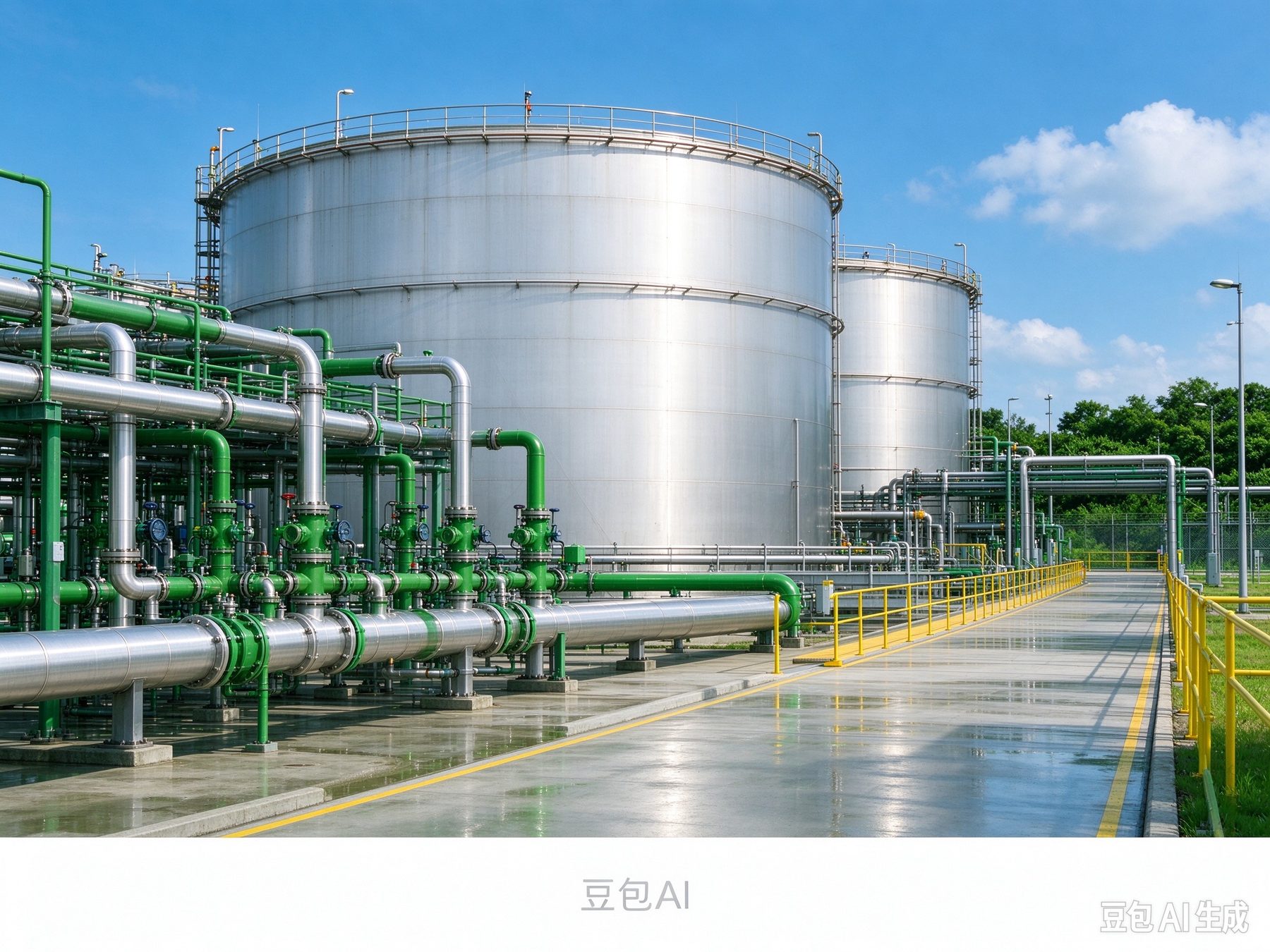
国庆假期刚过,吉林辽源的化工园区里,12个储氢罐、2个缓冲罐、16台电解槽已经安装到位。据当地发布的消息,中国天楹旗下辽源天楹风光储氢氨醇一体化项目已进入投产前冲刺阶段,设备安装与系统联调同步推进,电解制氢、甲醇合成及风电输送等核心环节均进入调试,多项公辅系统具备运行条件。
这个项目的体量在同类中少见:总投资286亿元,是吉林省“绿氢+”产业的标志性工程,也是辽源引进的首个百亿级产业项目。项目基于废矿坑生态修复建设,走的是“矿坑生态治理+风光发电+储氢制醇”一体化融合的路子,一期计划生产绿氢2万吨、绿甲醇17万吨。
真正让它在行业里被反复提起的是技术路线。项目利用风电等可再生能源制取绿氢,同时从生物质利用环节捕集二氧化碳,再把绿氢与二氧化碳直接合成为电制甲醇。据公开信息,这是国内首个采用纯“绿氢+二氧化碳”路线的规模化电制甲醇项目,也是全球单体规模最大的在建电制甲醇设施之一,与部分依赖化石合成气补碳的路线形成了明确区别。
建设进度方面,化工园区土建工程完成率已达95%,全部设备订货完成,此前设备安装完成约30%;制氢车间、氢气球罐区、生物质电厂、中央控制室等单元已具备联动条件。项目计划于2026年四季度投产,建成后将成为东北首个吉瓦级绿氢生产基地,并助力所在园区碳排放降幅超过90%。
把绿氢做成甲醇,解决的是储运与消纳两个老问题。氢气难以长距离运输,甲醇在常温常压下是液体,可以直接借用现有的化工品物流体系;而绿色甲醇一旦进入国际航运燃料市场,价格与需求就有了新的参照系,不再只依赖国内化工品的定价逻辑。
吉林已经在验证这条通道。今年,上海电气洮南绿色甲醇项目的产品在上海洋山港为一艘甲醇双燃料集装箱船完成加注,标志着吉林绿醇进入国际航运规模化应用;随后,沪吉辽三地启动共建“绿色燃料运输走廊”,吉林产出的绿色甲醇经陆路运抵大连港中转存储,换装专用化学品船后南下抵达上海港完成终端加注,“吉林生产—大连中转—上海加注”的全链条被打通。洮南项目全面达产后,每年可消纳生物质约100万吨。
吉林的绿色燃料布局并不止于甲醇。公开信息显示,当地同步推进吉电万吨级绿色航煤、中煤30万吨绿色甲醇等项目,洮南重点推动上海电气20万吨、华能30万吨绿色甲醇项目开工,并在本地布局电解槽、碳纤维叶片等装备制造,试图把“绿电—绿氢—绿色化学品”的链条尽可能留在省内。
辽源所在的吉林西部,是全国少有的“风光资源+生物质资源+化工园区”三项齐备的区域。以白城为例,“十四五”期间新能源装机规模达到1910万千瓦,成为东北首个千万千瓦级新能源发电城市,并被纳入第一批国家级能源领域氢能试点区域;当地把“风光火储+绿色氢氨醇一体化”作为长期战略,力争2030年实现制氢20万至30万吨、绿色化工品200万吨。
不过,绿醇的商业闭环仍有两道考题。第一道是碳源,纯“绿氢+二氧化碳”路线要求稳定的生物质碳源供应,生物质收储、运输、预处理的成本直接决定甲醇成本;第二道是溢价,绿色甲醇能否稳定拿到高于化石甲醇的价格,取决于国际航运减排规则的执行力度与买方的长期采购意愿,这两件事都不完全由生产企业决定。
与此同时,国内绿色甲醇的在建产能正在快速累积。除吉林外,多个沿海与西部省份也在推进电制甲醇、绿色航煤项目,一旦国际航运需求释放不及预期,同质化竞争可能先于盈利到来,这也是项目投产前需要预判的风险。
为什么是辽源,值得多问一句。吉林西部拥有可观的风光资源,同时又是传统化工与农业地区,具备合成氨、甲醇等基础化工的产业积累与人才储备;当地长期面临的消纳压力,也让“把电变成化工品”成为自然而然的选择。绿氢耦合化工最现实的路径,是把便宜的绿电、可用的碳源与既有的合成装置组合起来,而不是从零新建一整套产业链。这也是近两年东北多个绿氢项目集中落地的共同逻辑。
“一体化”三个字背后,其实是要解决一个工程难题:风电、光伏的出力是波动的,而化工合成装置最怕的就是频繁启停。项目采用16台电解槽,配套储氢与储能设施,本质上是在电源与化工装置之间加一层“缓冲”,既保证合成工序的稳定运行,又尽可能提高电解槽的利用率。这套设计的成败,直接决定项目的实际产出能否达到设计值——绿氢项目的经济性,往往不取决于铭牌产能,而取决于年运行小时数。
买方的确定性来自国际市场。绿色甲醇目前最主要的应用场景是国际航运燃料,需求方对减碳强度有严格核算要求,产品需要经过全生命周期的碳足迹认证才能进入采购清单。这意味着项目的真实考验不在建成投产那一天,而在于投产后能不能持续拿到认证、能不能锁定长期采购协议。价格则取决于绿电成本、电解槽利用小时与甲醇售价三个变量,任何一个变量的波动都会明显改变项目回报。
风险同样需要正视。第一是进度风险,一体化项目涉及电源、制氢、合成、储运多个环节,任何一个环节的调试延误都会整体后移;第二是成本风险,绿氢成本目前仍高于煤制氢,需要绿电价格足够低、设备利用足够充分才能拉平;第三是市场风险,国内多个省份都在布局绿色甲醇,未来几年供给集中释放可能先于需求增长。对辽源项目而言,能否在投产前锁定有约束力的长期采购协议,比建成多少产能更值得关注。
内陆项目的物流约束容易被忽略,却直接影响项目成败。绿氢、绿甲醇的运输成本与运距高度相关,地处内陆的辽源需要通过公路或铁路把产品运往沿海港口或下游化工客户,这部分费用会直接侵蚀项目利润。因此,一体化项目在选址时,除了考虑风光资源与化工基础,还要核算产品的运输半径与储运设施条件。能否就近消化部分产品、能否与周边化工园区形成互供关系,往往决定项目的实际竞争力。
从联动调试到稳定达产,通常还有一段不算短的距离。按计划,一期2万吨绿氢、17万吨绿甲醇将在四季度迎来投产节点,这批产能能否如期转化为稳定出货,将是观察吉林“绿氢+”模式成色的第一个窗口。
【研究支持机构:《中国工业报社》能源与双碳研究中心 |中国能源产业发展网】
Ma Xingchuan
Just after the National Day holiday, in the chemical industrial park of Liaoyuan, Jilin, 12 hydrogen storage tanks, 2 buffer tanks, and 16 electrolyzers have been installed in place. According to local announcements, the Liaoyuan Tianying Wind-Power Hydrogen Storage and Ammonia-Methanol Integrated Project, under China Tianying, has entered the pre-production sprint stage. Equipment installation and system debugging are progressing simultaneously, and core processes such as electrolytic hydrogen production, methanol synthesis, and wind power transmission have all entered commissioning, with multiple auxiliary systems ready for operation.
The scale of this project is rare in its category: with a total investment of 28.6 billion yuan, it is a landmark project for the 'green hydrogen' industry in Jilin Province, and also the first 10-billion-level industrial project introduced to Liaoyuan. The project is built on the ecological restoration of abandoned mining pits and follows an integrated approach of 'mine pit ecological management + wind and solar power generation + hydrogen storage and methanol production.' Phase I plans to produce 20,000 tons of green hydrogen and 170,000 tons of green methanol.
What truly makes it repeatedly mentioned in the industry is its technological route. The project uses renewable energy such as wind power to produce green hydrogen, while capturing carbon dioxide from biomass utilization, then directly synthesizing methanol from green hydrogen and carbon dioxide. According to public information, this is the first large-scale e-methanol project in China to adopt a pure "green hydrogen + carbon dioxide" route, and it is also one of the largest single-unit e-methanol facilities under construction in the world, clearly distinguishing it from routes that rely in part on fossil syngas to supplement carbon.
In terms of construction progress, the civil engineering in the chemical industrial park has reached 95% completion, and all equipment has been ordered, with about 30% of the equipment previously installed; units such as the hydrogen production workshop, hydrogen storage sphere area, biomass power plant, and central control room are already capable of integrated operation. The project is planned to start production in the fourth quarter of 2026, and upon completion, it will become the first gigawatt-level green hydrogen production base in Northeast China, helping the park achieve a carbon emission reduction of more than 90%.
Turning green hydrogen into methanol addresses two long-standing issues: storage and utilization. Hydrogen is difficult to transport over long distances, while methanol is a liquid under normal temperature and pressure, allowing it to directly use the existing chemical logistics system. Once green methanol enters the international shipping fuel market, its price and demand will have a new benchmark, no longer relying solely on the domestic chemical pricing logic.
Jilin has already been testing this channel. This year, the Shanghai Electric Taonan Green Methanol Project's product was loaded onto a methanol dual-fuel container ship at Shanghai Yangshan Port, marking the entry of Jilin's green methanol into large-scale international shipping applications. Subsequently, Shanghai, Jilin, and Liaoning launched a joint initiative to build a 'green fuel transportation corridor,' where green methanol produced in Jilin is transported by land to Dalian Port for transit storage, then loaded onto specialized chemical ships to reach Shanghai Port for final refueling. The full chain of 'Jilin production — Dalian transit — Shanghai refueling' has thus been completed. Once the Taonan project reaches full production, it can consume approximately 1 million tons of biomass per year.
Jilin's layout for green fuels is not limited to methanol. Public information shows that the region is simultaneously advancing projects such as Jidain's 10,000-ton green aviation fuel and Zhongmei's 300,000-ton green methanol. In Taonan, there is a focus on promoting the start of construction for Shanghai Electric's 200,000-ton and Huaneng's 300,000-ton green methanol projects, as well as establishing local equipment manufacturing for electrolyzers and carbon fiber blades, attempting to keep the 'green electricity—green hydrogen—green chemicals' chain within the province as much as possible.
Liaoyuan, located in western Jilin, is one of the few regions in the country that possesses a combination of 'wind and solar resources + biomass resources + chemical industrial parks.' Take Baicheng as an example: during the 14th Five-Year Plan period, the installed capacity of renewable energy reached 19.1 million kilowatts, making it the first city in Northeast China with a renewable energy power generation capacity of over ten million kilowatts, and it was included in the first batch of national pilot areas for hydrogen energy in the energy sector. Locally, the strategy of 'wind-solar-thermal storage + integrated green hydrogen, ammonia, and methanol' has been adopted as a long-term goal, aiming to produce 200,000 to 300,000 tons of hydrogen and 2 million tons of green chemicals by 2030.
However, the commercial closed loop of green methanol still faces two challenges. The first is the carbon source: the pure 'green hydrogen + carbon dioxide' route requires a stable supply of biomass carbon sources, and the cost of biomass collection, storage, transportation, and pre-treatment directly determines the cost of methanol. The second is the premium: whether green methanol can consistently achieve a price higher than fossil methanol depends on the enforcement of international shipping emission reduction rules and the long-term purchasing willingness of buyers—both of which are not entirely determined by the producers.
At the same time, domestic green methanol production capacity under construction is rapidly accumulating. Besides Jilin, several coastal and western provinces are also promoting projects for methanol from electricity and green aviation fuel. If the demand from international shipping does not materialize as expected, homogenized competition may precede profitability, which is a risk that needs to be anticipated before the projects start production.
Why Liaoyuan? It's worth asking. The western part of Jilin has considerable wind and solar resources, and at the same time is a traditional chemical and agricultural area, with accumulated industries and talent reserves in basic chemicals such as synthetic ammonia and methanol; the long-standing local pressure to utilize resources also makes 'turning electricity into chemicals' a natural choice. The most practical path for green hydrogen-coupled chemicals is to combine cheap green electricity, available carbon sources, and existing synthesis facilities, rather than building an entirely new industrial chain from scratch. This has also been the common logic behind the concentration of several green hydrogen projects in Northeast China in recent years.
"Behind the three characters 'integration' lies actually the goal of solving an engineering challenge: the output of wind and solar power is fluctuating, while chemical synthesis units are most afraid of frequent start-ups and shutdowns. The project uses 16 electrolyzers, supported by hydrogen and energy storage facilities, which essentially adds a 'buffer' between the power source and the chemical units. This not only ensures the stable operation of the synthesis process but also maximizes the utilization of the electrolyzers. The success of this design directly determines whether the project's actual output can reach the design value — the economics of green hydrogen projects often do not depend on the nameplate capacity but on the annual operating hours."
The certainty for buyers comes from the international market. The main current application of green methanol is as fuel for international shipping. Buyers have strict accounting requirements for carbon intensity, and the product must undergo full lifecycle carbon footprint certification before it can be included in procurement lists. This means that the real test of a project is not the day it is completed and put into production, but whether it can continuously obtain certification and lock in long-term procurement agreements after production begins. The price depends on three variables: the cost of green electricity, the utilization hours of the electrolyzer, and the methanol selling price. Any fluctuation in one of these variables can significantly change the project’s return.
Risks also need to be taken seriously. The first is schedule risk. An integrated project involves multiple stages such as power supply, hydrogen production, synthesis, and storage and transportation; delays in any one stage will push back the overall timeline. The second is cost risk. Currently, the cost of green hydrogen is still higher than coal-based hydrogen, so it requires sufficiently low green electricity prices and high equipment utilization to break even. The third is market risk. Several provinces in China are planning green methanol, and in the coming years, supply could be released in a concentrated manner before demand grows. For the Liaoyuan project, securing binding long-term purchase agreements before production starts is more worth attention than how much capacity is built.
The logistics constraints of inland projects are easily overlooked, yet they directly affect the success or failure of a project. The transportation costs of green hydrogen and green methanol are highly related to distance. Located inland, Liaoyuan needs to transport its products via road or rail to coastal ports or downstream chemical customers, and these costs directly erode project profits. Therefore, when selecting a site for an integrated project, in addition to considering wind and solar resources and chemical infrastructure, it is also necessary to account for the product's transportation radius and storage and transportation facility conditions. Whether a portion of the products can be consumed nearby or whether a mutual supply relationship can be formed with surrounding chemical parks often determines the project's actual competitiveness.
From synchronized commissioning to stable production, there is usually still a considerable distance to cover. According to the plan, Phase I, with 20,000 tons of green hydrogen and 170,000 tons of green methanol, is expected to reach the production milestone in the fourth quarter. Whether this capacity can be translated into stable shipments as scheduled will be the first window to observe the maturity of Jilin's 'green hydrogen' model.
Source: China Jilin Net, People's Daily, Jilin Provincial Government Portal, and publicly available industry data.
[Research support institutions: Energy and Dual-Carbon Research Center, China Industry Newspaper | China Energy Industry Development Network]
本网站摘录或转载的属于第三方的信息,目的在于传递更多信息,内容仅供参考。相关股票、投融资等资讯及分析并不代表本网站赞同其意见和对其真实性负责,不构成投资建议。
若不慎涉及侵权,请在相关内容刊发之日起 30 日内联系我们,我们将第一时间进行删除处理。
转载本网资讯请注明来源作者。本网原创文章、研究报告禁止转发。
Information excerpted or reprinted from third parties on this website is intended to convey more information for reference only. Related stocks, investment and financing news and analysis do not represent the endorsement of this website, nor does this website assume responsibility for their authenticity, and do not constitute investment advice.
If any content unintentionally infringes upon rights, please contact us within 30 days from the date of publication, and we will remove it as soon as possible.
When reprinting content from this website, please indicate the source and author. Original articles and research reports of this website may not be redistributed.
数据来源与口径说明:本平台数据与资讯均以「唯一官方口径」采集与发布,优先采用国家部委、国家统计局、海关总署、中国氢能联盟、IEA / IRENA / IMO 等官方或政府间机构公开数据;同一指标只取一个来源,不做多源拼接。数值为公开发布值,可能因统计口径、产地与发布时间不同而存在差异,仅供参考,不构成交易依据。Data sources and methodology: all data and news on this platform are collected and published from a single official source, giving priority to public data from government bodies and intergovernmental organisations such as the National Bureau of Statistics, the General Administration of Customs, the China Hydrogen Alliance, and IEA / IRENA / IMO. One indicator has one source only and is never stitched together from multiple sources. Figures are published values and may vary with statistical scope, origin and release date. For reference only; not a basis for transactions.
相关信息Related Information同栏目 · 可直接进入各自最终页Same section · each opens its own final page
- 从"主配微"协同到算电协同:江西一张看不见的网托起看得见的灯火暖与产业旺2026-10-12
- 废枝变船燃料 香港中华煤气旗下VENEX入选全球可持续交通优秀实践案例绿色甲醇Green Methanol
- 海南首个万吨级“海风—绿氢—绿色甲醇”示范项目落子儋州洋浦绿色甲醇Green Methanol
- 中裕能源携旗下广东宝杰打通生物质能全链路生物质与生物燃料biomass and biofuel
- 山西落地全省首笔“生物质能循环利用”生物多样性贷款生物质与生物燃料biomass and biofuel
- 河北开展多用户绿电直连项目申报 建成投产前严禁变更投资主体绿氢与氢基燃料