
碱性电解槽的三道门槛:工信部规范条件如何把能效、负荷与一致性写成硬指标The three thresholds of alkaline electrolyzers: How the MIIT specification conditions turn energy efficiency, load, and consistency into hard metrics
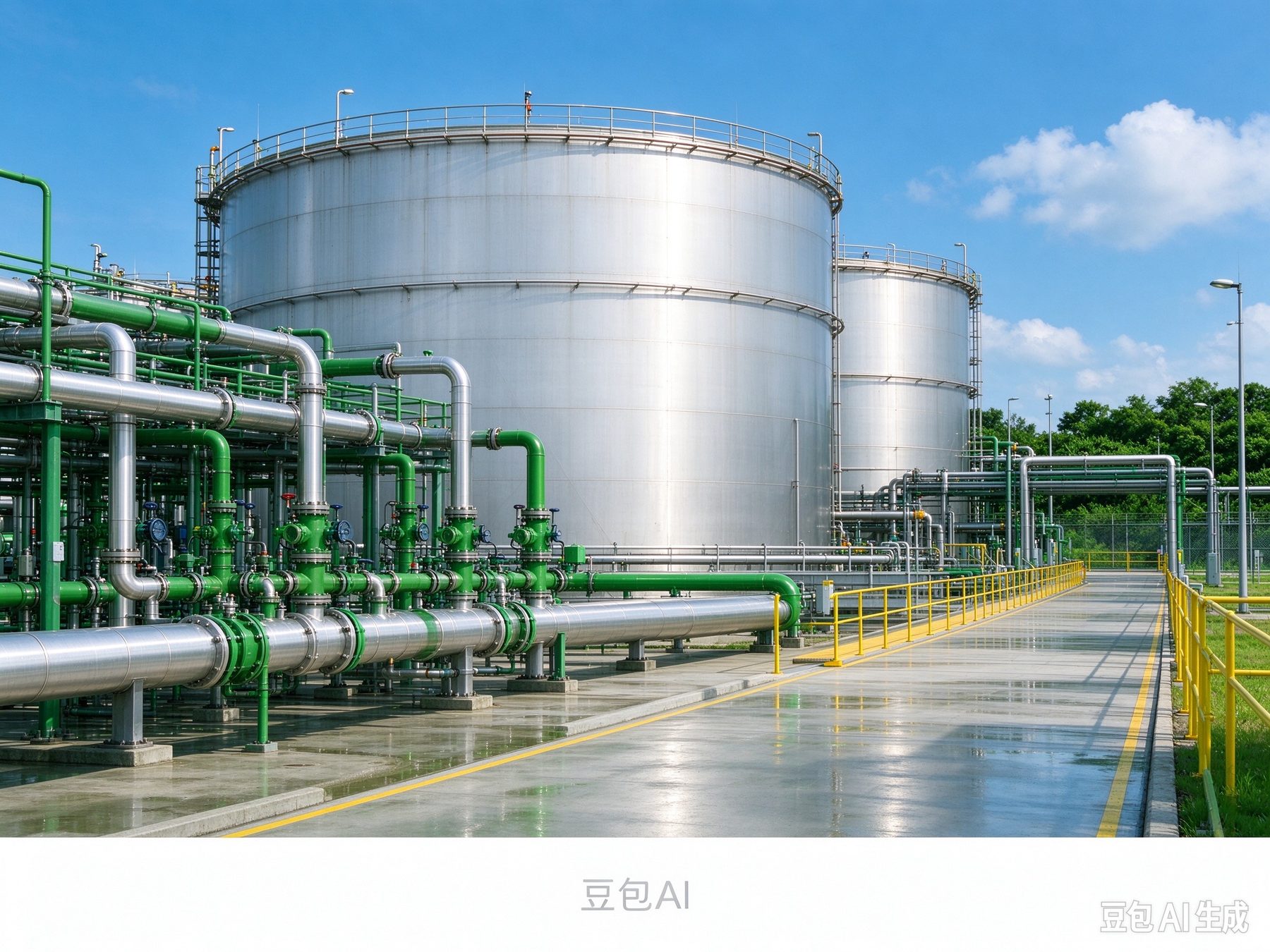
一份征求意见稿把行业里最容易被含糊处理的三件事写成了可以逐条检验的硬指标。2026年9月18日,工业和信息化部就《氢能装备(碱性水电解制氢装备)制造行业规范条件(2026年本)(征求意见稿)》公开征求意见,文件覆盖碱性电解槽、隔膜、极板、催化电极四类制造环节,围绕基本要求、创新能力、生产工艺、产品性能、绿色制造、安全生产、质量标准、监督管理八个方面提出要求。此后不到两个月,2026年11月6日,东方电气自主研制的2000Nm³/h碱性电解水制氢装备在四川省自贡氢能产业园下线交付,中国质量认证中心成都分公司现场核验了该装备在25%、50%、75%、100%、125%五个负荷点下的实际运行性能。把这两件事并排看,行业竞争的重心已经不在参数表的漂亮程度,而在这套参数能不能被第三方在同一台设备上复现出来。
能效门槛:同一台设备存在两套测量口径
规范条件在能效上给出的不是单一数字,而是按压力等级和测量方法分列的四组数值。高压碱性电解槽额定电流密度应不低于2500A/m²,额定工况下直流电耗应不高于4.3kWh/Nm³氢气(电流法)或4.6kWh/Nm³氢气(流量计法);常压碱性电解槽额定电流密度应不低于4000A/m²,额定工况下直流电耗应不高于4.5kWh/Nm³氢气(电流法)或4.7kWh/Nm³氢气(流量计法)。同一设备给出两种上限,用的是行业里的通行做法:电流法按电解槽电压乘以电流再除以氢气产量推算,计量点集中在整流出口与气液分离之后;流量计法直接量取产氢量,对气液分离器的分离效率更敏感。两种口径的差值本身不构成技术优劣,它反映的是量氢方式不同带来的系统偏差,因此跨厂商比较电耗时必须先对齐口径,否则一个采用流量计法的厂商与一个采用电流法的厂商之间,百分之几的差距很可能只是测量方式造成的。
把这个门槛与2026年11月6日下线的装备公开参数对齐,几个位置很值得读。东方电气这款装备单堆额定电流密度为4000A/m²,恰好落在文件对常压碱槽设定的电流密度下限;直流电耗低至4.2kWh/Nm³氢气,优于文件给出的4.5kWh/Nm³上限;全负荷区间氧中氢含量不超过1.5%、氢中氧不超过0.5%,与文件在气体纯度上的要求完全一致。需要同时点明的是,公开信息未披露该装备电耗指标的测试方法,因此不能断定它采用的是哪一种口径;也未披露其在不同负荷点上的完整电耗曲线,只公布了低至4.2kWh/Nm³这一项。这两处空白都属于文件里要求、企业尚未公开的信息。
负荷门槛:从额定区间一路写到调节速率
负荷这一项被拆成了两个维度。文件要求碱性电解槽功率调节范围应满足30%至120%的额定功率,变负荷速率(加减载功率)应不小于额定负荷的20%每分钟。下限30%解决的是低负荷段的效率与气液分离问题:电流偏低时产气速率下降、电解液中的气泡分离变差,单位产氢的能耗明显上升。上限120%对应的是高负荷段的膜与密封承压边界。变负荷速率20%每分钟这条更容易被忽略,它约束的其实是升负荷过程中电流密度与槽温、气液比的动态匹配能力,速率过快时局部小室的电流分布会先于温度场做出响应,表现为电压抬升不均。
对照来看,2026年11月6日下线的装备给出的是25%至125%的宽负荷稳定调节能力,区间两端都比文件要求宽出一截。需要留意的是,公开信息未披露该装备的变负荷速率指标,也没有公布升降载过程中的槽压波动曲线,因此文件里那条20%每分钟的要求对该装备是否满足,目前无法核验。宽负荷区间与变负荷速率是两件事,前者说的是能站得住的范围,后者说的是在这个范围内移动的速度。行业报道常常把两者混用,把25%至125%读成可以任意快速调整,这个读法并不成立。
同一时期可作横向参照的还有另一组现场读数。据中国能源新闻网2026年10月22日报道,海德氢能兴安盟600兆瓦绿氢旗舰工程的公开运行成果显示,依托方形电解技术与场站级集群控制,16台电解槽、80兆瓦集群实现协同升降载,具备10%至120%的宽负荷调节能力与大于5%每秒的负荷响应速度,全天高波动运行工况下氧中氢含量保持低于0.3%,风电年消纳率超过95%;同一项目公布的场站全年可用率超过97%、直流电耗不高于4.3kWh/Nm³、全链路综合能耗约4.86kWh/Nm³、累计积累五万小时运行数据。两组数据放在一起,一个在单机尺度,一个在集群尺度,落差最大的地方恰好是响应速度:单台设备标称的是负荷区间,场站标称的是每秒的响应能力,对参与电网调节的绿氢基地而言,后者才决定这套资产能否被当作可调节电源来交易。
一致性门槛:极差与标准偏差为何比效率更难
文件里最硬的两条其实与效率无关。一条是空间一致性:在额定工况下,剔除端极板旁第一个小室的电压后,电解槽电解小室“电压极差”应不高于160mV,电解小室“电压标准偏差”应不高于80mV,并宜不高于40mV。另一条是时间衰减:碱性电解槽累计产氢运行2000小时后,额定电流密度下“直流电耗增加值”应不高于2%,其中后1000小时的增加值应不高于0.8%。前者管的是同一台槽内不同位置的电化学状态差异,后者管的是同一台槽在不同时间点的性能漂移。
空间一致性之所以更难,是因为它约束的不是设计上限而是制造重复精度。端极板旁第一个小室之所以要单独剔除,是因为端极板要承担进出水与导电端的结构功能,其电流分布与内部小室天然不同,标准选择剔除而非修正,说明制定者承认这种差异是结构性的、不应被误判为质量缺陷。剩下的内部小室则不允许有超过160mV的电压落差——在4000A/m²的电流密度下,160mV的电压差对应的是相当可观的电耗差异,而这个差异既可能来自极板平面度与接触电阻,也可能来自气液分布不均与局部温度场偏差。也就是说,同一批次设备的一致性差异,最终会以能耗差异的形式出现在结算单上。
时间衰减那一条的两段式设计同样讲究。2000小时累计不高于2%,其中后1000小时不高于0.8%,意味着前半段允许的增量是1.2%、后一段是0.8%,前松后紧的斜率指向的是典型的衰减形态:早期存在一次性不可逆损失,运行一段时间后进入相对平缓的阶段。文件要求企业建立水电解制氢装备产品故障分析、可靠性评估与持续改进机制,正是因为这两段数字只有在同口径的连续试验里才能测出来。
衰减口径的换算难题:两组数字为何不能直接比
把文件里的时间衰减要求与企业公布的年化指标放在一起对照,会遇到一个必须讲清楚的口径问题。文件给出的是累计运行2000小时后的电耗增量,2000小时约合0.23年,若按线性折算相当于年均百分之八以上;而2026年11月6日下线的装备公布的是长周期运行能耗衰减小于1.5%每年,若同样按线性折算约合每千小时0.17%,远低于文件后1000小时0.8%的水平。两组数字指向的方向一致,但量级差出近一个数量级,说明它们测的并不是同一件事:文件考核的是特定试验条件下的规定动作,企业表述多半对应长期稳定运行后的能耗漂移。公开信息未披露该装备衰减指标的统计边界、试验窗口与是否包含辅机能耗,因此这个对照只能说明口径存在差异,不能据此得出谁的衰减更低的结论。
把这条讲清楚的意义在于,行业里正在形成一种用厂商年化数字替代统一考核的习惯。规范条件之所以要把2000小时与后1000小时写死,正是为了压缩这种自由度。同一时期,另一组标准化动作也在同步推进。据《国家能源集团报》2026年10月28日报道,国能氢创牵头编制的DL/T 3135-2026《温室气体 产品碳足迹量化方法与要求 水电解制氢系统》、DL/T 3136-2026《质子交换膜燃料电池系统性能测试规范》、DL/T 3137-2026《质子交换膜燃料电池用氢气品质检测移动实验室通用技术规范》三项行业标准计划于2027年4月9日实施,国能氢创氢能公司通讯员崔元帅介绍,这三项标准分别填补了水电解制氢系统碳足迹量化方法、质子交换膜燃料电池系统性能测试和氢气品质移动检测三个领域的行业标准空白。把制造规范条件与检测标准放在一起看,可以确认一个方向:氢能装备正在从按厂商口径自证,转向按统一方法可测。
门槛之下的现实位置:国产化与第三方检测
在规范条件之外,产业链的整体状态也在同一时期被公开表述。据人民网2026年11月6日报道,中国产业发展促进会副会长兼氢能分会主任委员魏锁介绍,在国家政策支持下,氢能产业链主要技术、关键材料和器件及装备制造基本实现国产化,氢能产业已进入技术创新、示范应用、规模降本、市场开拓阶段。东方氢能党委书记、董事长巩李明在同一时间点的公开表述中介绍,东方氢能作为四川省氢能产业链链主企业,依托东方电气长期氢能技术积淀,已形成碱性电解槽、质子交换膜电解槽、燃料电池系统、全国产膜电极的完整产品矩阵。
把这两段表述与文件条款放在一起,会看到一条清晰的分工。零部件与材料层面的国产化解决的是能不能造出来,规范条件约束的是造出来的设备能不能稳定达到同一组性能,第三方检测机构解决的是这个结论由谁给出。2026年11月6日的下线仪式在这条线上具有标志性:中国质量认证中心成都分公司现场核验25%、50%、75%、100%、125%五个负荷点的实际运行性能,公开表述称这是行业首次在发布会中实时测试并展示电解槽的实际运行能力。把验收测试从工厂车间搬到发布会现场,改变了产品可信度的生成方式——它从厂商承诺变成了现场读数。
研判:门槛落在哪里,短板就在哪里
从工程角度给一个判断。电流密度与直流电耗是设计选择,门槛抬高的是设计的下限,这一层国内头部厂商已经进入互相追赶的阶段;负荷区间与变负荷速率是控制与结构能力,这一层有明确的边界可以攻关;小室电压一致性与2000小时后的电耗增幅则是制造能力,它考验的是产线工艺、装配精度与来料一致性,而这恰恰是规模交付阶段最先暴露短板的地方。当一个型号从一台样机走向几十台、上百台并行生产时,设计是一次性的,制造重复精度是持续的,规范条件里那条宜不高于40mV的标准偏差指标,实际上就是对这种重复精度提出的量化期望。
同时也要看到这份文件仍处在征求意见阶段,它的约束力是引导性的,不具备行政审批的前置性,因此门槛的实际约束力取决于后续的检测能力与业主方的采信态度。技术上更关键的一步在于测量口径的对齐:当一家厂商按电流法报电耗、另一家按流量计法报电耗时,第三方检测机构能否在同一套量氢方法下复现双方的数据,才决定这些数字能不能被放进同一张技术对比表。而在这一层,2026年11月5日国家能源局发布的《中国氢能和绿色燃料试点典型案例(2026)》所列出的内蒙古氢能装备实证实验平台项目值得关注,该项目已开展8台千方级碱性电解槽、3台兆瓦级质子交换膜电解槽检测,并探索一检多证的机制与国际认证对接,其价值恰恰在于把不同厂商的设备放到同一套测量方法下比较。
本文参考资料来源于工业和信息化部、国家能源局公开发布的氢能装备制造行业规范条件与能源行业标准公告;东方电气、东方氢能、中国质量认证中心成都分公司与海德氢能公开发布的装备技术资料与运行数据;中国能源新闻网、人民网、中国能源报、国家能源集团报等公开报道。
A draft for public consultation turned the three things in the industry that are most easily handled ambiguously into hard indicators that can be checked item by item. On September 18, 2026, the Ministry of Industry and Information Technology publicly solicited opinions on the "Specification Conditions for the Manufacturing Industry of Hydrogen Energy Equipment (Alkaline Water Electrolysis Hydrogen Production Equipment) (2026 Edition) (Draft for Comments)." The document covers four types of manufacturing processes: alkaline electrolyzers, diaphragms, electrodes, and catalytic electrodes, and sets requirements around eight aspects: basic requirements, innovation capability, production processes, product performance, green manufacturing, safe production, quality standards, and supervision and management. Less than two months later, on November 6, 2026, a 2000 Nm³/h alkaline water electrolysis hydrogen production device independently developed by Dongfang Electric was rolled off the production line and delivered at the Zigong Hydrogen Energy Industrial Park in Sichuan Province. The Chengdu Branch of the China Quality Certification Center conducted an on-site verification of the actual operating performance of this device at five load points: 25%, 50%, 75%, 100%, and 125%.
Looking at these two matters side by side, the focus of industry competition is no longer on how impressive the specification sheet is, but on whether this set of parameters can be reproduced by a third party on the same device.
Efficiency threshold: There are two sets of measurement standards on the same device.
The standard conditions do not provide a single figure for energy efficiency, but instead list four sets of values according to pressure level and measurement method. The rated current density of high-pressure alkaline electrolyzers should not be less than 2500 A/m², and the DC power consumption under rated operating conditions should not exceed 4.3 kWh/Nm³ of hydrogen (current method) or 4.6 kWh/Nm³ of hydrogen (flow meter method); the rated current density of atmospheric-pressure alkaline electrolyzers should not be less than 4000 A/m², and the DC power consumption under rated operating conditions should not exceed 4.5 kWh/Nm³ of hydrogen (current method) or 4.7 kWh/Nm³ of hydrogen (flow meter method). When two limits are given for the same equipment, it follows the common industry practice: the current method calculates based on electrolyzer voltage multiplied by current and divided by hydrogen production, with measurement points concentrated at the rectifier outlet and after gas-liquid separation; the flow meter method directly measures hydrogen production and is more sensitive to the separation efficiency of the gas-liquid separator.
The difference between the two calibers itself does not constitute a technical advantage or disadvantage; it reflects a systematic bias caused by different hydrogen measurement methods. Therefore, when comparing electricity consumption across manufacturers, the calibers must first be aligned. Otherwise, a difference of a few percent between a manufacturer using the flow meter method and one using the current method is very likely just due to the measurement method.
Align this threshold with the publicly disclosed parameters of equipment that will be phased out on November 6, 2026; several points are worth noting. The Dongfang Electric equipment has a single-stack rated current density of 4000 A/m², which exactly falls within the lower limit set in the document for atmospheric alkaline cells; its DC power consumption is as low as 4.2 kWh/Nm³ of hydrogen, better than the 4.5 kWh/Nm³ upper limit given in the document; the oxygen content in hydrogen across the full load range does not exceed 1.5%, and the hydrogen content in oxygen does not exceed 0.5%, fully consistent with the gas purity requirements in the document. It should also be pointed out that public information does not disclose the testing method for the equipment's power consumption, so it cannot be concluded which standard is used; nor does it disclose the complete power consumption curve at different load points, only the low value of 4.2 kWh/Nm³ is published. These two gaps correspond to information required by the document but not yet made public by the company. Load threshold: written from the rated range all the way to the regulation rate.
The load item has been divided into two dimensions. The document requires that the power adjustment range of the alkaline electrolyzer should meet 30% to 120% of the rated power, and the load change rate (increase or decrease in power) should not be less than 20% of the rated load per minute. The lower limit of 30% addresses efficiency and gas-liquid separation issues at low load: when the current is too low, the gas production rate decreases, bubble separation in the electrolyte worsens, and the energy consumption per unit of hydrogen increases significantly. The upper limit of 120% corresponds to the membrane and sealing pressure-bearing boundaries at high load. The load change rate of 20% per minute is easier to overlook; it actually constrains the dynamic matching ability of current density with tank temperature and gas-liquid ratio during load increase. If the rate is too fast, the current distribution in local small cells responds before the temperature field does, manifesting as uneven voltage rise.
In contrast, the equipment that went offline on November 6, 2026, is rated with a wide load stability adjustment capability of 25% to 125%, with both ends of the range exceeding the requirements in the document. It is important to note that publicly available information does not disclose the variable load rate indicator of this equipment, nor does it provide the pressure fluctuation curve during load increase or decrease. Therefore, whether this equipment meets the document's requirement of 20% per minute cannot currently be verified. The wide load range and the variable load rate are two different things: the former refers to the range over which the equipment can operate stably, while the latter refers to the speed of movement within this range. Industry reports often confuse the two, interpreting 25% to 125% as the ability to adjust at any speed, but this interpretation is not valid.
Another set of on-site readings from the same period can also be used for horizontal comparison. According to China Energy News on October 22, 2026, the publicly reported operational results of the 600 MW green hydrogen flagship project of Haide Hydrogen Energy in Xing'an League show that, relying on square electrolyzer technology and plant-level cluster control, the 16 electrolyzer units in the 80 MW cluster can achieve coordinated load ramping, with a wide load regulation capability of 10% to 120% and a load response speed greater than 5% per second. Under conditions of high fluctuations throughout the day, the hydrogen content in oxygen remains below 0.3%, and the annual wind power consumption rate exceeds 95%. The same project reports an annual plant availability of over 97%, DC power consumption not exceeding 4.3 kWh/Nm³, full-chain comprehensive energy consumption of about 4.86 kWh/Nm³, and accumulated long-term operational data of fifty thousand hours.
Two sets of data are placed together, one at the single-machine scale, the other at the cluster scale, and the biggest gap happens to be in response speed: a single device is rated by load range, while a station is rated by responses per second. For green hydrogen bases participating in grid regulation, the latter determines whether this set of assets can be traded as dispatchable power.
Consistency Threshold: Why Range and Standard Deviation Are Harder Than Efficiency
The two strictest criteria in the document are actually unrelated to efficiency. One is spatial consistency: under rated conditions, after excluding the first sub-cell near the end plate, the 'voltage range' of the electrolyzer sub-cells should not exceed 160 mV, the 'voltage standard deviation' should not exceed 80 mV, and ideally not exceed 40 mV. The other is temporal decay: after 2000 hours of cumulative hydrogen production by an alkaline electrolyzer, the 'increase in DC power consumption' under rated current density should not exceed 2%, with the increase in the last 1000 hours not exceeding 0.8%. The former pertains to electrochemical state differences at different positions within the same cell, while the latter pertains to performance drift of the same cell over different time points.
Spatial consistency is more difficult because it constrains not the design limit but the manufacturing repeatability. The first small chamber next to the end plate is specifically excluded because the end plate has to bear the structural functions of water inlet/outlet and electrical conduction, and its current distribution naturally differs from that of the internal small chambers. The standard chooses exclusion rather than correction, indicating that the drafters acknowledge this difference as structural and should not be mistaken for a quality defect. The remaining internal small chambers are not allowed to have a voltage drop exceeding 160 mV—at a current density of 4000 A/m², a 160 mV voltage difference corresponds to a considerable difference in energy consumption, which may come from the flatness of the plates and contact resistance, as well as uneven gas-liquid distribution and local temperature field deviations. In other words, the consistency differences within the same batch of equipment will ultimately appear as energy consumption differences on the settlement bill.
The two-stage design of the time decay item is equally sophisticated. The cumulative value over 2,000 hours should not exceed 2%, with the latter 1,000 hours not exceeding 0.8%. This means the allowable increment in the first half is 1.2% and in the latter half is 0.8%. The slope of being loose at first and tight later points to a typical decay pattern: there is an initial one-time irreversible loss, followed by a relatively flat phase after some operation. The document requires enterprises to establish product failure analysis, reliability assessment, and continuous improvement mechanisms for water electrolysis hydrogen production equipment, precisely because these two numbers can only be measured in continuous tests with the same caliber.
The conversion problem of decay caliber: why can't the two sets of numbers be directly compared?
When comparing the time decay requirements in the document with the annualized indicators published by the company, one encounters a clarification issue regarding the measurement standard. The document provides the incremental power consumption after 2,000 cumulative operating hours, which is approximately 0.23 years; if linearly converted, this corresponds to more than 8% per year. The equipment that rolled off the line on November 6, 2026, reports a long-cycle operating energy consumption decay of less than 1.5% per year, which, if similarly converted linearly, amounts to about 0.17% per thousand hours, far below the 0.8% level for the second thousand hours as stated in the document. While both sets of figures point in the same direction, the magnitude differs by nearly an order of magnitude, indicating that they are measuring different things: the document assesses prescribed actions under specific test conditions, whereas the company's statement mostly corresponds to energy consumption drift after long-term stable operation. Since public information does not disclose the statistical boundaries, test windows, or whether auxiliary power consumption is included in the decay indicators of the equipment, this comparison only indicates a difference in measurement standards and cannot be used to conclude whose decay is lower.
The significance of explaining this clearly lies in the fact that the industry is developing a habit of using manufacturers' annualized numbers as a substitute for unified assessments. The reason the regulatory conditions stipulate 2,000 hours and the subsequent 1,000 hours is precisely to limit this flexibility. During the same period, another set of standardization actions is also being promoted simultaneously.
According to the National Energy Group Newspaper on October 28, 2026, three industry standards led by Guoneng Hydrogen Innovation are planned to be implemented on April 9, 2027: DL/T 3135-2026 "Quantification Methods and Requirements of Greenhouse Gas Product Carbon Footprint – Water Electrolysis Hydrogen Production System," DL/T 3136-2026 "Performance Test Specifications for Proton Exchange Membrane Fuel Cell Systems," and DL/T 3137-2026 "General Technical Specifications for Mobile Laboratory Testing of Hydrogen Quality for Proton Exchange Membrane Fuel Cells." Cui Yuanshuai, correspondent of Guoneng Hydrogen Energy Company, introduced that these three standards respectively fill the gaps in industry standards in three areas: carbon footprint quantification methods for water electrolysis hydrogen production systems, performance testing of proton exchange membrane fuel cell systems, and mobile testing of hydrogen quality. Looking at manufacturing specification conditions and testing standards together, one direction can be confirmed: hydrogen energy equipment is shifting from self-certification based on manufacturer standards to measurable standards based on a unified method. The reality below the threshold: localization and third-party testing.
Outside of standard conditions, the overall state of the industry chain was also publicly stated during the same period. According to a report by People's Daily Online on November 6, 2026, Wei Suo, Vice President of the China Industrial Development Promotion Association and Chairman of the Hydrogen Energy Branch, introduced that, with national policy support, the main technologies, key materials, devices, and equipment manufacturing of the hydrogen energy industry chain have basically achieved localization. The hydrogen energy industry has entered the stages of technological innovation, demonstration applications, cost reduction at scale, and market expansion. At the same time, Gong Liming, Party Secretary and Chairman of Dongfang Hydrogen Energy, stated publicly that, as the leading enterprise of Sichuan Province's hydrogen energy industry chain, Dongfang Hydrogen Energy, relying on Dongfang Electric’s long-term accumulation of hydrogen energy technology, has formed a complete product matrix including alkaline electrolysis cells, proton exchange membrane electrolysis cells, fuel cell systems, and fully domestically produced membrane electrodes.
Putting these two statements together with the provisions of the document reveals a clear division of responsibilities. Localization at the component and material level addresses whether it can be manufactured; the regulatory conditions constrain whether the manufactured equipment can stably achieve the same set of performance standards; and third-party testing agencies determine who provides this conclusion. The offline ceremony on November 6, 2026, is emblematic along this line: the Chengdu branch of the China Quality Certification Center on-site verified the actual operating performance at five load points—25%, 50%, 75%, 100%, and 125%—and publicly stated that this was the first time in the industry that the actual operational capability of an electrolyzer was tested and demonstrated live at a launch event. By moving acceptance testing from the factory floor to the release event, the way product credibility is generated was changed—it transformed from a manufacturer’s promise to an on-site reading.
Analysis: Where the threshold lies is where the weak point is.
Give a judgment from an engineering perspective. Current density and DC power consumption are design choices, and raising the threshold is the lower limit of the design. At this stage, leading domestic manufacturers have already entered a phase of mutual competition. Load range and variable load rate relate to control and structural capability, and at this stage, there are clear boundaries that can be tackled. Cell voltage consistency and the increase in power consumption after 2000 hours relate to manufacturing capability, which tests production line processes, assembly precision, and material consistency. This is precisely where weaknesses are first exposed during large-scale delivery. When a model moves from a single prototype to dozens or hundreds of units in parallel production, the design is one-time, while manufacturing repeatability is ongoing. The standard deviation specification of no more than 40mV under normalized conditions is, in fact, a quantified expectation for this repeatability.
At the same time, it should be noted that this document is still in the consultation stage. Its binding effect is guiding rather than mandatory for administrative approval, so the actual constraint of the threshold depends on subsequent testing capability and the acceptance attitude of the owner. A more technically critical step lies in aligning measurement calibers: when one manufacturer reports electricity consumption using the current method while another reports it using the flow meter method, whether a third-party testing agency can reproduce both sets of data under the same hydrogen measurement method ultimately determines whether these figures can be placed in the same technical comparison table. At this level, the Inner Mongolia Hydrogen Energy Equipment Pilot Testing Platform project listed in the "Typical Pilot Cases of Hydrogen Energy and Green Fuels (2026)" issued by the National Energy Administration on November 5, 2026, deserves attention. This project has carried out testing on 8 kiloton-level alkaline electrolyzers and 3 megawatt-level proton exchange membrane electrolyzers, and is exploring mechanisms for multiple certifications from a single test as well as integration with international certifications. Its value lies precisely in comparing equipment from different manufacturers under the same measurement method.
The reference materials for this article come from the publicly released industry standard conditions for hydrogen energy equipment manufacturing and energy industry standard announcements by the Ministry of Industry and Information Technology and the National Energy Administration; equipment technical data and operation data publicly released by Dongfang Electric, Dongfang Hydrogen Energy, China Quality Certification Center Chengdu Branch, and Haide Hydrogen Energy; and public reports from China Energy News Network, People’s Daily Online, China Energy News, and National Energy Group News, among others.
本网站摘录或转载的属于第三方的信息,目的在于传递更多信息,内容仅供参考。相关股票、投融资等资讯及分析并不代表本网站赞同其意见和对其真实性负责,不构成投资建议。
若不慎涉及侵权,请在相关内容刊发之日起 30 日内联系我们,我们将第一时间进行删除处理。
转载本网资讯请注明来源作者。本网原创文章、研究报告禁止转发。
Information excerpted or reprinted from third parties on this website is intended to convey more information for reference only. Related stocks, investment and financing news and analysis do not represent the endorsement of this website, nor does this website assume responsibility for their authenticity, and do not constitute investment advice.
If any content unintentionally infringes upon rights, please contact us within 30 days from the date of publication, and we will remove it as soon as possible.
When reprinting content from this website, please indicate the source and author. Original articles and research reports of this website may not be redistributed.
数据来源与口径说明:本平台数据与资讯均以「唯一官方口径」采集与发布,优先采用国家部委、国家统计局、海关总署、中国氢能联盟、IEA / IRENA / IMO 等官方或政府间机构公开数据;同一指标只取一个来源,不做多源拼接。数值为公开发布值,可能因统计口径、产地与发布时间不同而存在差异,仅供参考,不构成交易依据。Data sources and methodology: all data and news on this platform are collected and published from a single official source, giving priority to public data from government bodies and intergovernmental organisations such as the National Bureau of Statistics, the General Administration of Customs, the China Hydrogen Alliance, and IEA / IRENA / IMO. One indicator has one source only and is never stitched together from multiple sources. Figures are published values and may vary with statistical scope, origin and release date. For reference only; not a basis for transactions.