
地沟油飞上天:SAF产能竞速,两条技术路线同时起跑used cooking oil (UCO) flying into the sky: SAF capacity race, two technical routes starting simultaneously
高志龙
餐厨废油的命运在过去两年被彻底改写。过去它要么流向下游饲料与化工,要么因监管缺位引发食品安全争议;如今,它被写进了航空业减碳的路线图,成为可持续航空燃料(SAF)最主力的原料。地沟油飞上天,从段子变成了产业。
变化的起点是制度。据公开规则,欧盟ReFuelEU航空法案要求自2025年起,欧盟机场供应的航空燃料中须掺混一定比例的可持续航空燃料,并计划在未来逐步提高这一比例;国际民航组织主导的CORSIA机制,则从国际航空碳排放抵消的角度,为SAF创造了另一重需求。两套制度叠加,把SAF从“示范项目”推成了“合规刚需”。
技术路线上,目前国内形成两条主线并行:一条是以废弃油脂为原料的HEFA(油脂加氢)路线,工艺成熟、产能落地快,是当前供给主力;另一条是以农林废弃物、生物质为原料的FT(费托合成)路线,原料来源更广,被视为中长期突破原料瓶颈的关键。两条路线在产能竞速中同时起跑,折射的是原料约束下不得不做的双轨选择。
央企的动作最能说明产业节奏。2026年2月6日,中国石化沧州分公司20万吨/年可持续航空燃料改造项目进行环评首次公示。据公示文件,项目位于沧州市新华区,投资约7.9亿元,拟部分利旧60万吨/年汽柴油加氢精制装置改造为20万吨/年航空燃料装置,配套20万吨/年原料预处理单元,主要产品为航空燃料、生物石脑油,副产少量气体。这家企业现有原油加工能力350万吨/年,改造的思路是典型的存量资产再定位——用既有装置的一部分,换一条新的产品线。
中国石油的节奏同样紧凑。其首套10万吨/年可持续航空燃料项目在华北石化全速建设,截至2026年5月底,基础设计全面完成,长周期设备订货同步启动。项目采用国际先进的HEFA工艺路线,联合华东设计院优化预处理方案,重点破解废弃油脂高酸、高氯、高杂质的处理难题,同时推进适航审定与原料保供。华北石化地处京津冀腹地、紧邻北京大兴国际机场,承担该机场约85%的航煤保供任务,区位优势天然适配SAF的供应半径。
更具战略意味的是产业组织层面的调整。2026年1月,国务院国资委正式批复中国石化与中国航油实施重组,业内普遍认为,此次联合的核心指向之一正是可持续航空燃料的产业布局——生产端与销售端打通,SAF从炼厂走向机场加油栓的通道会更顺畅。技术验证方面,中国石化自主研发的SAF已在C919、ARJ21上完成试飞,全生命周期碳排放较传统航油降低50%以上,填补了国产机型的应用空白。
民营力量的扩张速度同样不容忽视。据行业统计,河南君恒生物70万吨HEFA装置、青岛董家口30万吨项目、浙江舟山22.5万吨SAF项目均在2026年全面推进建设;海新能科20万吨异构SAF已稳定量产,并获得国际可持续认证,具备出口资质。按规划,到2027年中国石化生物航煤总产能将突破50万吨。
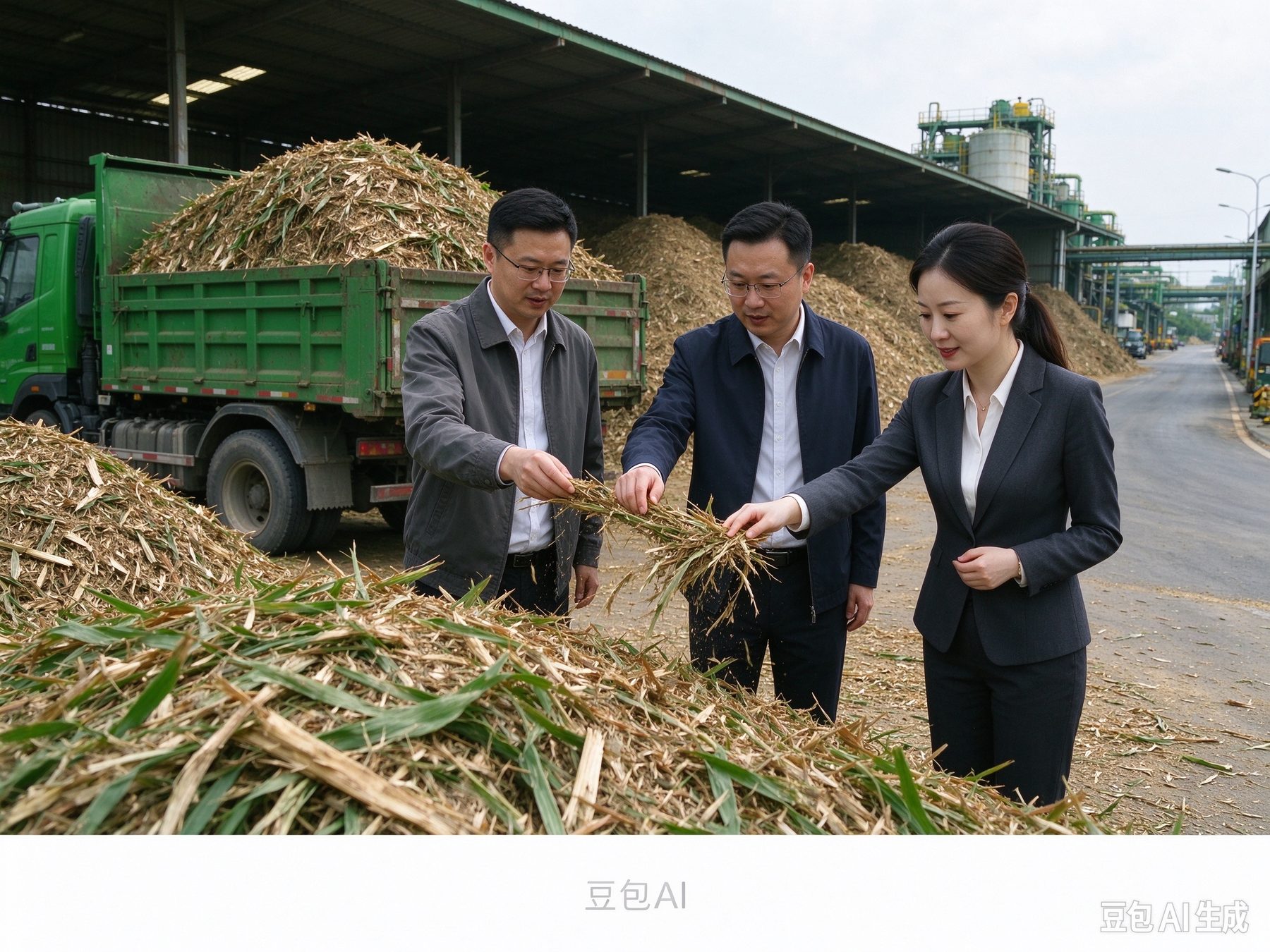
FT路线则代表了更长远的想象空间。四川泸州10万吨生物质SAF项目是国内首套商业化大型FT装置,以竹粉、酒糟、农林废料为原料,总投资35亿元;北京房山10万吨绿色航煤项目定位京津冀航空低碳保供,年减排二氧化碳约80万吨;中能建新疆呼图壁绿色航煤产业园规划10万吨SAF产能,总投资41.2亿元,预计带动800人就业;新疆塔城1万吨电转液(PtL)示范项目则以风光绿氢加二氧化碳捕集合成燃料,属于前沿技术验证。
两条路线各有代价。HEFA受制于废弃油脂的收集半径与总量天花板,原料价格波动会直接传导至成本;FT前期投资大、工艺链条长,但原料来源广、可规模化,一旦打通经济性,天花板更高。行业普遍的判断是,2025年至2030年HEFA承担供给主力,其后随着新疆、四川、内蒙古等农林资源富集地区项目集中投产,秸秆基航煤有望成为增长的核心动力。
原料组织是这条产业链上最容易被低估的环节。废弃油脂分散在餐饮终端,收集依赖收运体系与价格机制,规范化程度直接决定可获得的原料量;农林废弃物则受制于收集半径与季节性。SAF项目能不能吃饱,往往不取决于装置产能,而取决于项目方圆几百公里内,有没有一套稳定、合规、成本可控的原料归集网络。
经济性是另一道门槛。SAF的生产成本显著高于传统航煤,现阶段的价格差主要靠政策要求、航空公司自愿采购与碳市场收益来消化。这意味着SAF产业的扩张节奏,取决于政策力度与成本下降速度这两条曲线的交汇时点——政策推得快,需求就上得快;技术进步快,供给才能跟得上。
海外市场也在同步推进。中石化炼化工程集团所属宁波工程公司2026年与联合生物燃料公司在塔什干国际投资论坛期间签署乌兹别克斯坦SAF项目前端工程设计及详细设计合同,该项目为中亚首个大型全产业链生物航油综合体,集生物质原料加工、绿色制氢、可持续航空燃料、电合成航油、绿色柴油生产于一体,总投资约61亿美元,配套大型光伏、绿氢与储能设施。中国工程企业由此把SAF的工程能力输出到了海外。
从地沟油到航空煤油,这条链条的重构意义不止于减碳。它把城市废弃物、农业剩余物与高端交通燃料连接起来,形成了一种新的资源循环范式。全球航空业每年消耗数亿吨航油,SAF目前的渗透率仍处于起步阶段,产能竞速才刚刚开始。谁能在原料组织、工艺经济性与认证体系上率先跑通,谁就握住了下一轮绿色燃料产业的话语权。
餐厨废弃油脂是这条产业链的源头,也是最大的不确定性来源。地沟油、泔水油分散在城市餐饮体系中,收集依赖回收网络与合规渠道,杂质含量、酸值、水分的波动都会直接影响预处理成本与装置负荷。业内普遍认为,原料成本在SAF总成本中占据主要比重,因此谁能建立稳定、可追溯的收储体系,谁就在成本与合规两端占据主动。
需求端的推力则来自政策与航空公司的减排承诺。欧盟已对航空燃料实施强制掺混要求,并将掺混比例逐步提高;国内航空公司也在通过加注试点积累运行经验。当掺混从自愿变为强制,SAF就从“示范产品”变成了必须采购的原料,市场规模的天花板由此被打开。但需要注意的是,强制掺混在短期内也会推高航空公司的燃料成本,最终价格如何在上游生产、航空公司与乘客之间分摊,仍需机制设计。
【研究支持机构:《中国工业报社》能源与双碳研究中心 |中国能源产业发展网】
Gao Zhilong
The fate of waste cooking oil has been completely rewritten over the past two years. In the past, it either flowed downstream into feed and chemical industries, or, due to regulatory gaps, caused food safety controversies; today, it has been incorporated into the aviation industry's carbon reduction roadmap, becoming the main raw material for sustainable aviation fuel (SAF). used cooking oil (UCO) flying into the sky has transformed from a joke into an industry.
The starting point of this change is regulation. According to publicly available rules, the EU ReFuelEU Aviation Act requires that starting in 2025, a certain percentage of sustainable aviation fuel must be blended into aviation fuel supplied at EU airports, with plans to gradually increase this proportion in the future; the CORSIA mechanism led by the International Civil Aviation Organization, from the perspective of offsetting international aviation carbon emissions, has created another layer of demand for SAF. The combination of these two systems has pushed SAF from a "demonstration project" to a "compliance necessity."
In terms of technology routes, two main lines have currently developed domestically in parallel: one is the HEFA (Hydroprocessed Esters and Fatty Acids) route using waste oils and fats as raw materials, which is mature, has quick capacity deployment, and is the current main supply; the other is the FT (Fischer-Tropsch) route using agricultural and forestry waste and biomass as raw materials, which has a wider range of sources and is seen as key for overcoming raw material bottlenecks in the medium to long term. Both routes started simultaneously in the capacity race, reflecting a dual-track choice that has to be made under raw material constraints.
The actions of state-owned enterprises best indicate the pace of the industry. On February 6, 2026, Sinopec Cangzhou Branch's 200,000 tons/year sustainable aviation fuel retrofit project held its first environmental impact assessment announcement. According to the announcement documents, the project is located in Xinhua District, Cangzhou City, with an investment of about 790 million yuan. It plans to partially retrofit a 600,000 tons/year diesel and gasoline hydrogenation refining unit into a 200,000 tons/year aviation fuel facility, supported by a 200,000 tons/year raw material pretreatment unit. The main products are aviation fuel and bio-naphtha, with a small amount of gas as a by-product. This enterprise currently has a crude oil processing capacity of 3.5 million tons/year. The retrofit approach is a typical repositioning of existing assets—using part of existing units to create a new product line.
The pace of China National Petroleum Corporation is equally tight. Its first 100,000 tons/year sustainable aviation fuel project is under full-speed construction at North China Petrochemical. As of the end of May 2026, the basic design has been fully completed, and long-cycle equipment orders have been simultaneously initiated. The project adopts the internationally advanced HEFA process route and collaborates with the East China Design Institute to optimize the pretreatment plan, focusing on solving the challenges of processing waste oils with high acidity, high chlorine, and high impurities, while also advancing airworthiness certification and raw material supply security. North China Petrochemical is located in the heart of the Beijing-Tianjin-Hebei region, adjacent to Beijing Daxing International Airport, and undertakes about 85% of the aviation fuel supply for this airport. Its location naturally suits the supply radius of SAF.
A strategically significant aspect is the adjustment at the level of industrial organization. In January 2026, the State-owned Assets Supervision and Administration Commission of the State Council officially approved the restructuring of Sinopec and China Aviation Oil. Industry insiders generally believe that one of the core aims of this merger is the industrial layout of sustainable aviation fuel (SAF) — connecting production and sales to make the pipeline from refineries to airport fuel hydrants smoother. In terms of technology verification, SAF independently developed by Sinopec has completed test flights on the C919 and ARJ21, with full lifecycle carbon emissions reduced by over 50% compared to traditional jet fuel, filling the application gap for domestically produced aircraft.
The expansion speed of private enterprises is equally noteworthy. According to industry statistics, Henan Junheng Bio's 700,000-ton HEFA facility, Qingdao Dongjiakou's 300,000-ton project, and Zhejiang Zhoushan's 225,000-ton SAF project will all fully advance construction in 2026; Haixin Energy's 200,000-ton isomerized SAF has already achieved stable mass production and obtained international sustainability certification, qualifying it for export. According to plans, by 2027 Sinopec's total bio-jet fuel production capacity will exceed 500,000 tons.
The FT route represents a longer-term imaginative space. The 100,000-ton biomass SAF project in Luzhou, Sichuan, is the country's first commercial large-scale FT facility, using bamboo powder, distiller's grains, and agricultural and forestry waste as raw materials, with a total investment of 3.5 billion yuan; the 100,000-ton green aviation fuel project in Fangshan, Beijing, is aimed at ensuring low-carbon aviation supply in the Beijing-Tianjin-Hebei region, reducing about 800,000 tons of carbon dioxide annually; the China Energy Construction Xinjiang Hutuobi Green Aviation Fuel Industrial Park plans a 100,000-ton SAF capacity, with a total investment of 4.12 billion yuan, expected to create 800 jobs; the 10,000-ton Power-to-Liquid (PtL) demonstration project in Tacheng, Xinjiang, uses wind and solar green hydrogen combined with carbon dioxide to synthesize fuel, representing a validation of cutting-edge technology.
Both pathways come with costs. HEFA is constrained by the collection radius and total ceiling of waste oils, and fluctuations in feedstock prices are directly reflected in costs; FT requires large upfront investment and involves a long process chain, but its feedstock sources are wide and scalable, and once economic viability is achieved, it has a higher ceiling. The general industry view is that from 2025 to 2030, HEFA will bear the main supply role, and thereafter, as projects in resource-rich regions such as Xinjiang, Sichuan, and Inner Mongolia come online, straw-based jet fuel is expected to become the core driver of growth.
Feedstock organization is the most easily underestimated link in this industry chain. Waste oils are scattered across catering terminals and their collection depends on the collection and transportation system as well as price mechanisms, and the level of standardization directly determines the amount of feedstock available; agricultural and forestry waste is constrained by the collection radius and seasonality. Whether a SAF project can operate at full capacity often does not depend on the capacity of the facility, but rather on whether there is a stable, compliant, and cost-controllable feedstock aggregation network within several hundred kilometers of the project site.
Economics is another threshold. The production cost of SAF is significantly higher than that of conventional aviation kerosene, and the current price difference is mainly absorbed through policy mandates, voluntary purchases by airlines, and carbon market revenues. This means that the pace of expansion of the SAF industry depends on the intersection point of two curves: the strength of policies and the rate of cost reduction—if policies advance quickly, demand will rise quickly; if technological progress is fast, supply can keep up. Overseas markets are also progressing simultaneously. In 2026, Ningbo Engineering Company, affiliated with Sinopec Engineering (Group), signed a front-end engineering design and detailed design contract for a SAF project in Uzbekistan with United Biofuels Company during the Tashkent International Investment Forum. This project is the first large-scale, full-industry-chain bio-aviation fuel complex in Central Asia, integrating biomass raw material processing, green hydrogen production, sustainable aviation fuel, electro-synthetic jet fuel, and green diesel production, with a total investment of approximately 6.1 billion USD and supporting large-scale photovoltaic, green hydrogen, and energy storage facilities. Chinese engineering companies have thus exported their SAF engineering capabilities overseas.
From used cooking oil (UCO) to aviation kerosene, the reconstruction of this chain has significance beyond carbon reduction. It connects urban waste, agricultural residues, and high-end transportation fuels, forming a new paradigm of resource circulation. The global aviation industry consumes hundreds of millions of tons of aviation fuel each year, and the current penetration rate of SAF is still at an initial stage, with the competition for production capacity just beginning. Whoever can first optimize raw material organization, process economics, and certification systems will hold the discourse power in the next round of the green fuel industry.
Food waste oil is the source of this industrial chain and also its greatest uncertainty. used cooking oil (UCO) and kitchen waste oil are scattered throughout the urban catering system, and their collection relies on recycling networks and compliance channels. Fluctuations in impurity content, acid value, and moisture directly affect pretreatment costs and facility load. Industry insiders generally believe that raw material costs account for the major portion of SAF's total cost. Therefore, whoever can establish a stable and traceable collection and storage system will gain the upper hand in both cost and compliance.
The demand-side push comes from policies and airlines' emission reduction commitments. The European Union has implemented mandatory blending requirements for aviation fuels and is gradually increasing the blending ratio; domestic airlines are also accumulating operational experience through refueling pilots. When blending changes from voluntary to mandatory, SAF (Sustainable Aviation Fuel) transforms from a 'demonstration product' into a required raw material, thereby opening the ceiling for market scale. However, it should be noted that mandatory blending will also increase airlines' fuel costs in the short term. How the final price is shared among upstream producers, airlines, and passengers still requires mechanism design.
Source: Public information from Sinopec and CNPC, Carbon Hydrogen Energy Network, China Petroleum and Chemical, China Daily, and industry public reports
[Research Supporting Institutions: Energy and Dual-Carbon Research Center of China Industry News Agency | China Energy Industry Development Network]
本网站摘录或转载的属于第三方的信息,目的在于传递更多信息,内容仅供参考。相关股票、投融资等资讯及分析并不代表本网站赞同其意见和对其真实性负责,不构成投资建议。
若不慎涉及侵权,请在相关内容刊发之日起 30 日内联系我们,我们将第一时间进行删除处理。
转载本网资讯请注明来源作者。本网原创文章、研究报告禁止转发。
Information excerpted or reprinted from third parties on this website is intended to convey more information for reference only. Related stocks, investment and financing news and analysis do not represent the endorsement of this website, nor does this website assume responsibility for their authenticity, and do not constitute investment advice.
If any content unintentionally infringes upon rights, please contact us within 30 days from the date of publication, and we will remove it as soon as possible.
When reprinting content from this website, please indicate the source and author. Original articles and research reports of this website may not be redistributed.
数据来源与口径说明:本平台数据与资讯均以「唯一官方口径」采集与发布,优先采用国家部委、国家统计局、海关总署、中国氢能联盟、IEA / IRENA / IMO 等官方或政府间机构公开数据;同一指标只取一个来源,不做多源拼接。数值为公开发布值,可能因统计口径、产地与发布时间不同而存在差异,仅供参考,不构成交易依据。Data sources and methodology: all data and news on this platform are collected and published from a single official source, giving priority to public data from government bodies and intergovernmental organisations such as the National Bureau of Statistics, the General Administration of Customs, the China Hydrogen Alliance, and IEA / IRENA / IMO. One indicator has one source only and is never stitched together from multiple sources. Figures are published values and may vary with statistical scope, origin and release date. For reference only; not a basis for transactions.
相关信息Related Information同栏目 · 可直接进入各自最终页Same section · each opens its own final page
- 从"主配微"协同到算电协同:江西一张看不见的网托起看得见的灯火暖与产业旺2026-10-12
- 废枝变船燃料 香港中华煤气旗下VENEX入选全球可持续交通优秀实践案例绿色甲醇Green Methanol
- 海南首个万吨级“海风—绿氢—绿色甲醇”示范项目落子儋州洋浦绿色甲醇Green Methanol
- 中裕能源携旗下广东宝杰打通生物质能全链路生物质与生物燃料biomass and biofuel
- 山西落地全省首笔“生物质能循环利用”生物多样性贷款生物质与生物燃料biomass and biofuel
- 286亿元与17万吨绿色甲醇:辽源“绿氢+”项目进入投产前联动调试绿色甲醇Green Methanol