
140万吨/年产能背后的氢能拐点:从示范破局到规模化起跑The Hydrogen Energy Turning Point Behind a Production Capacity of 1.4 Million Tons per Year: From Demonstration Breakthrough to Large-Scale Launch
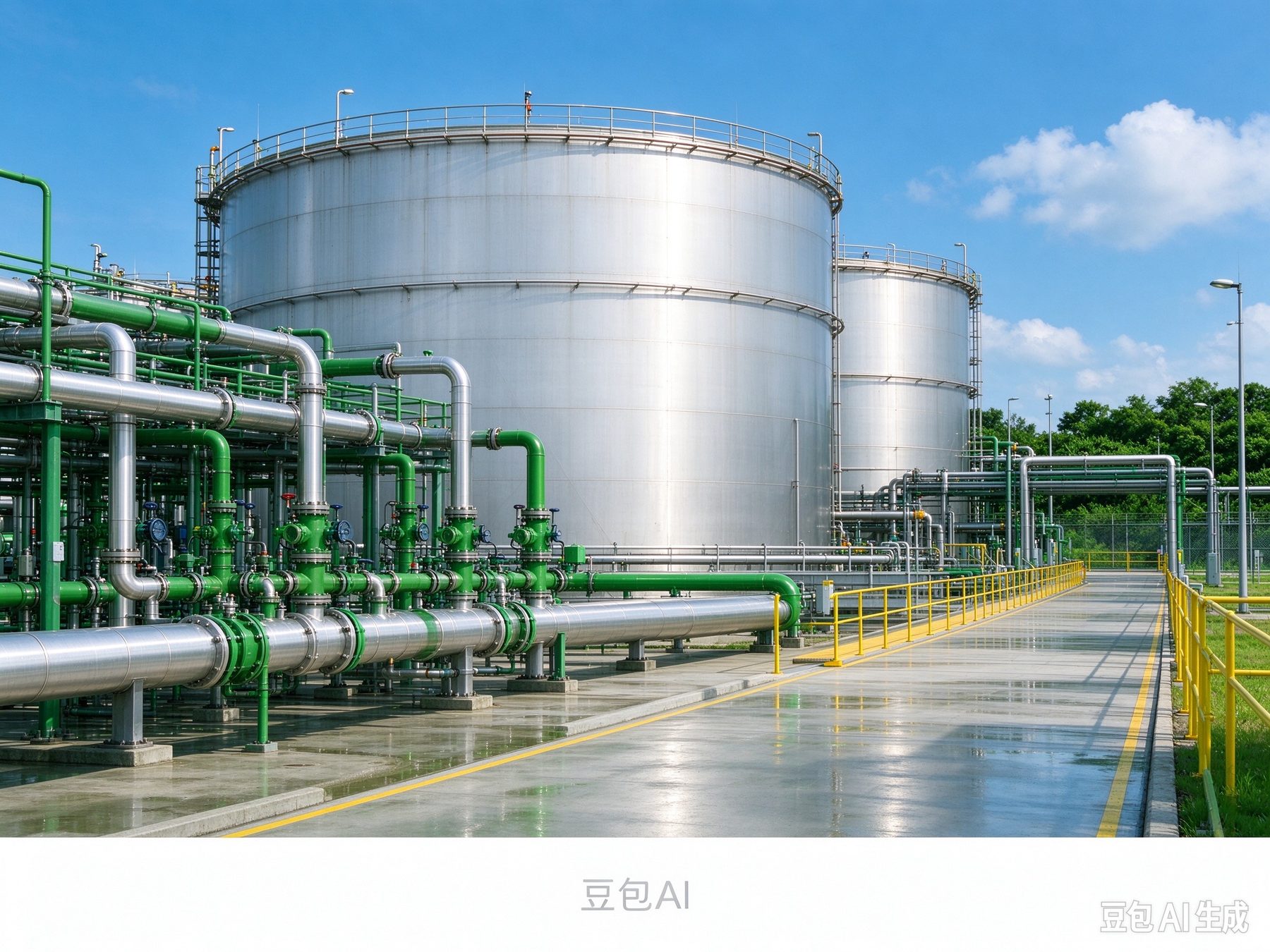
一、产能账:建成27万吨、在建113万吨,扩张曲线陡峭
2026年8月,国家能源局发布《中国氢能发展报告(2026)》,给出一组标志性数据:截至2026年6月,我国建成在建可再生能源制氢产能规模超140万吨/年,其中建成投运超27万吨/年、在建超113万吨/年。一个关键信号是,在建规模是已建成规模的4倍以上,意味着绿氢产能仍处在快速放量期,后续释放潜力可观。从全球坐标看,2025年全球氢气生产消费规模约1.09亿吨,同比增长约3%,中国和欧洲两地合计贡献了全球超过七成的可再生能源制氢产能,中国已是全球制氢版图的核心变量。行业机构测算,2026年全球氢能源市场总规模已达2840亿美元,较2025年的2310亿美元增长22.9%,其中绿氢产能占比首次突破18%;中国氢能源市场在2026年上半年实现产值4120亿元人民币,全年预计突破8600亿元。
二、需求账:2026年绿氢300万吨,电解槽27.8GW的硬约束
需求侧的量级正在被重新定义。国金证券依据2026年政府工作报告的单位GDP减碳目标测算,2026年绿氢需求将达300万吨,对应带动电解槽约27.8GW;“十五五”期间绿氢需求将攀升至6500万吨,对应电解槽约602GW。这一测算意味着,电解槽赛道未来五年的累计需求空间,较当前年新增装机量存在数量级跃升。值得注意,需求释放路径并非均匀分布,而是沿“绿色航运、氢能重卡、化工、冶金、储能”的优先级推进,其中价格敏感度最低的化工与交通场景率先突破。中国石油规划总院相关研究显示,到2030年绿氢产能建设目标约200万吨,较2025年新增175万吨,资源富集区“发得出、送不走”的困境,正被绿氢就地转化破解。
三、装备账:12.8GW出货量、61%全球份额的成本逻辑
装备端是观察产业成熟度的窗口。行业统计显示,2026年上半年中国电解槽出货量达12.8GW,占全球总出货量的61%,碱性电解槽成本已降至1480元/kW,较2025年下降12%。成本下行叠加规模扩张,使中国在电解槽全球供给格局中占据主导。从企业市值看,氢能板块市值前三依次为潍柴动力(2319.90亿元)、阳光电源(2279.50亿元)、宝丰能源(1739.47亿元),三家企业市值合计占TOP10总市值的61.90%,产业资本已经开始向头部集中。在储能与发电耦合侧,2025年全国建成投运的氢储能电站规模约150MW/小时,预计2026年增至300MW/小时,增幅达100%,氢能在电力系统中的角色正从应急备用向长时储能延伸。京津冀、长三角、粤港澳、成渝四大示范城市群聚集了全国60%以上的氢能产业链企业,区域集群效应凸显。
四、场景账:交通、化工、冶金三线并进的消纳出口
下游消纳是绿氢从“产能”转向“价值”的最后一公里。交通领域,2025年推广燃料电池汽车近8000辆,氢基燃料船舶累计投运超10艘,氢动力无人机超30款;燃料电池重卡保有量突破2.4万辆,氢燃料电池系统在商用车领域的渗透率预计达3.2%,标志氢能交通进入实质性推广期。工业领域,绿氨、绿甲醇建成投运产能分别达70万吨/年、38万吨/年,成为绿氢规模化消纳的重要出口;氢冶金示范加速,国内已有7个万吨级氢基直接还原铁项目启动建设,合计年产能规划180万吨。此外,全国累计建成加氢站约620座,纯氢管道投运超350公里,基础设施的稳步推进为多场景示范验证提供了底座。
五、研判:从“政策驱动”转向“成本驱动”的关键一跃
综合产能、需求、装备、场景四条线索,氢能产业正处在从技术示范探索迈入规模化商业化的拐点。核心判断有三:其一,绿氢成本能否稳定下探至灰氢替代区间(目前内蒙古绿氢生产成本已控制在17至20元每公斤,仅为全国平均水平的60%),是决定化工与冶金场景放量的前提;其二,电解槽名义产能已突破25GW/年,远超2026年约8至10GW的真实需求,阶段性产能过剩将加速行业洗牌;其三,海外市场正成为消化产能、兑现技术红利的新增长曲线,2026年上半年电解槽海外出口已达321.25MW,同比涨幅超1600%。对投资者与产业方而言,下一阶段的竞争焦点,将从“谁能拿到补贴”转向“谁能以最低LCOH(平准化制氢成本)交付可靠装备”。
1. Production capacity account: 270,000 tons completed, 1.13 million tons under construction, expansion curve is steep
In August 2026, the National Energy Administration released the "China Hydrogen Energy Development Report (2026)", providing a set of significant data: as of June 2026, China had established and was constructing renewable energy-based hydrogen production capacity exceeding 1.4 million tons per year, of which over 270,000 tons per year were completed and operational, and over 1.13 million tons per year were under construction. A key signal is that the under-construction capacity is more than four times the completed capacity, indicating that green hydrogen production capacity is still in a rapid expansion phase, with considerable potential for further development. From a global perspective, in 2025, global hydrogen production and consumption reached about 109 million tons, a year-on-year increase of approximately 3%. China and Europe together contributed more than 70% of the world's renewable energy-based hydrogen production capacity, making China a core variable in the global hydrogen landscape. Industry organizations estimate that in 2026, the total global hydrogen energy market reached 284 billion USD, a 22.9% increase over 231 billion USD in 2025, with the share of green hydrogen capacity exceeding 18% for the first time. In the first half of 2026, China's hydrogen energy market achieved a production value of 412 billion RMB, with the full-year expected to surpass 860 billion RMB.
II. Demand Ledger: Hard Constraints of 3 Million Tons of Green Hydrogen and 27.8 GW of Electrolyzers by 2026
The scale of demand is being redefined. According to Guojin Securities, based on the unit GDP carbon reduction targets in the 2026 government work report, green hydrogen demand is expected to reach 3 million tons by 2026, corresponding to driving about 27.8 GW of electrolyzers; during the 15th Five-Year Plan period, green hydrogen demand will climb to 65 million tons, corresponding to about 602 GW of electrolyzers. This calculation implies that the cumulative demand space for the electrolyzer sector over the next five years represents an order-of-magnitude increase compared to the current annual new installed capacity. It is worth noting that the demand release path is not evenly distributed but is being promoted according to the priority of "green shipping, hydrogen heavy trucks, chemicals, metallurgy, energy storage," with the least price-sensitive chemical and transportation scenarios breaking through first. Related research from China National Petroleum Corporation Planning Institute indicates that by 2030, the green hydrogen production capacity construction target is about 2 million tons, an increase of 1.75 million tons compared to 2025. The dilemma in resource-rich areas of "capable of production but unable to be transported" is being addressed through on-site conversion of green hydrogen.
3. Equipment Accounts: 12.8GW Shipments and 61% Global Market Share Cost Logic
The equipment side is a window to observe industry maturity. Industry statistics show that in the first half of 2026, China's electrolyzer shipments reached 12.8GW, accounting for 61% of global shipments. The cost of alkaline electrolyzers has dropped to 1,480 RMB/kW, a 12% decrease compared to 2025. The combination of cost reduction and scale expansion allows China to dominate the global electrolyzer supply landscape. In terms of company market value, the top three hydrogen sector companies are Weichai Power (231.99 billion RMB), Sungrow Power Supply (227.95 billion RMB), and Baofeng Energy (173.947 billion RMB). The combined market value of these three companies accounts for 61.90% of the top 10 total market value, indicating that industry capital is beginning to concentrate at the top. On the storage and power generation coupling side, the nationwide hydrogen energy storage power station capacity completed and put into operation in 2025 is about 150 MW/h, and it is expected to increase to 300 MW/h in 2026, an increase of 100%. Hydrogen energy's role in the power system is extending from emergency backup to long-duration storage.
The Beijing-Tianjin-Hebei, Yangtze River Delta, Guangdong-Hong Kong-Macao, and Chengdu-Chongqing four major demonstration city clusters gather more than 60% of the country's hydrogen energy industry chain enterprises, highlighting the regional cluster effect.
4. Scenario account: the consumption and export of three lines—transportation, chemical, and metallurgy—advance simultaneously.
Downstream utilization is the final mile for green hydrogen to shift from 'capacity' to 'value.' In the transportation sector, by 2025, nearly 8,000 fuel cell vehicles will be promoted, over 10 hydrogen-based fuel ships will be put into operation, and more than 30 hydrogen-powered drones will be available; the number of fuel cell heavy trucks will exceed 24,000, and the penetration rate of hydrogen fuel cell systems in commercial vehicles is expected to reach 3.2%, marking the substantial promotion period of hydrogen energy transportation. In the industrial sector, the operational production capacities of green ammonia and green methanol will reach 700,000 tons/year and 380,000 tons/year, respectively, becoming important outlets for large-scale utilization of green hydrogen; hydrogen metallurgy demonstrations are accelerating, with 7 domestic 10,000-ton-level hydrogen-based direct reduction iron projects already launched, with a total planned annual capacity of 1.8 million tons. In addition, about 620 hydrogen refueling stations have been built nationwide, and over 350 km of pure hydrogen pipelines are in operation, with the steady progress of infrastructure providing a foundation for multi-scenario demonstration and verification.
5. Assessment: The critical leap from 'policy-driven' to 'cost-driven'
Integrating four clues—production capacity, demand, equipment, and application scenarios—the hydrogen energy industry is at a turning point, moving from technical demonstration and exploration to large-scale commercialization. There are three core judgments: first, whether the cost of green hydrogen can steadily drop to the replacement range of gray hydrogen (currently, the production cost of green hydrogen in Inner Mongolia has been controlled at 17 to 20 yuan per kilogram, only 60% of the national average), which is the prerequisite for mass adoption in chemical and metallurgical scenarios; second, the nominal capacity of electrolyzers has exceeded 25 GW/year, far exceeding the real demand of about 8 to 10 GW in 2026, and the temporary overcapacity will accelerate industry reshuffling; third, overseas markets are becoming a new growth curve for absorbing capacity and realizing technology dividends, with overseas electrolyzer exports reaching 321.25 MW in the first half of 2026, a year-on-year increase of more than 1600%. For investors and industry players, the next stage of competition will shift from 'who can receive subsidies' to 'who can deliver reliable equipment at the lowest LCOH (levelized cost of hydrogen)'.
本网站摘录或转载的属于第三方的信息,目的在于传递更多信息,内容仅供参考。相关股票、投融资等资讯及分析并不代表本网站赞同其意见和对其真实性负责,不构成投资建议。
若不慎涉及侵权,请在相关内容刊发之日起 30 日内联系我们,我们将第一时间进行删除处理。
转载本网资讯请注明来源作者。本网原创文章、研究报告禁止转发。
Information excerpted or reprinted from third parties on this website is intended to convey more information for reference only. Related stocks, investment and financing news and analysis do not represent the endorsement of this website, nor does this website assume responsibility for their authenticity, and do not constitute investment advice.
If any content unintentionally infringes upon rights, please contact us within 30 days from the date of publication, and we will remove it as soon as possible.
When reprinting content from this website, please indicate the source and author. Original articles and research reports of this website may not be redistributed.
数据来源与口径说明:本平台数据与资讯均以「唯一官方口径」采集与发布,优先采用国家部委、国家统计局、海关总署、中国氢能联盟、IEA / IRENA / IMO 等官方或政府间机构公开数据;同一指标只取一个来源,不做多源拼接。数值为公开发布值,可能因统计口径、产地与发布时间不同而存在差异,仅供参考,不构成交易依据。Data sources and methodology: all data and news on this platform are collected and published from a single official source, giving priority to public data from government bodies and intergovernmental organisations such as the National Bureau of Statistics, the General Administration of Customs, the China Hydrogen Alliance, and IEA / IRENA / IMO. One indicator has one source only and is never stitched together from multiple sources. Figures are published values and may vary with statistical scope, origin and release date. For reference only; not a basis for transactions.
相关信息Related Information同栏目 · 可直接进入各自最终页Same section · each opens its own final page
- 从"主配微"协同到算电协同:江西一张看不见的网托起看得见的灯火暖与产业旺2026-10-12
- 废枝变船燃料 香港中华煤气旗下VENEX入选全球可持续交通优秀实践案例绿色甲醇Green Methanol
- 海南首个万吨级“海风—绿氢—绿色甲醇”示范项目落子儋州洋浦绿色甲醇Green Methanol
- 中裕能源携旗下广东宝杰打通生物质能全链路生物质与生物燃料biomass and biofuel
- 山西落地全省首笔“生物质能循环利用”生物多样性贷款生物质与生物燃料biomass and biofuel
- 286亿元与17万吨绿色甲醇:辽源“绿氢+”项目进入投产前联动调试绿色甲醇Green Methanol