
可持续航空燃料出口订单排至2027年 原料成本认证三重约束待解Sustainable aviation fuel export orders are scheduled until 2027, with raw material costs, certification, and triple constraints yet to be resolved
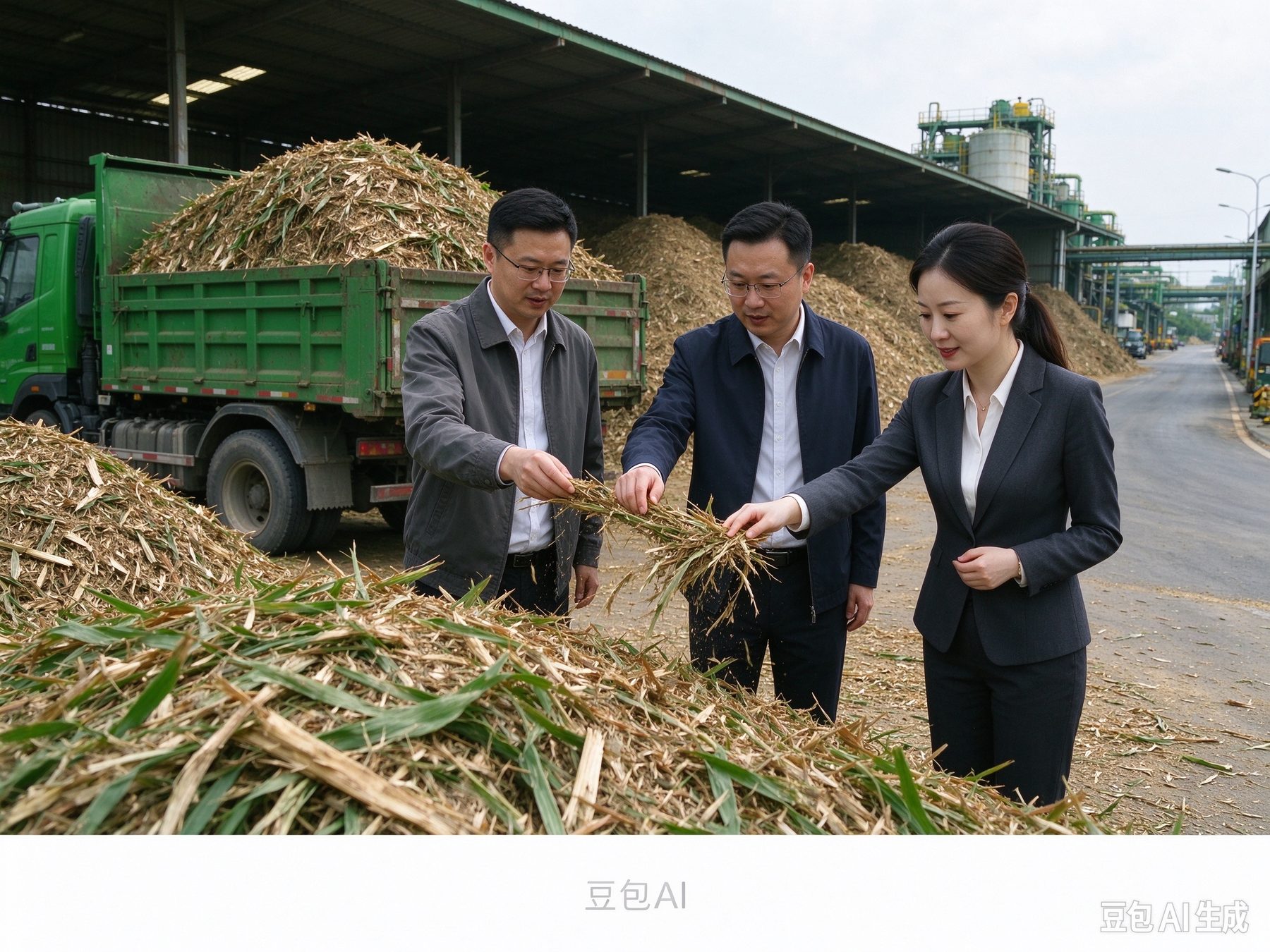
以餐厨废油为原料,地沟油经过炼制后可变身为可持续航空燃料(SAF),当前国内SAF出口订单已排到2027年。出口行情火热的另一面,是原料供给、成本、规则认证三重约束长期存在。
中国民营科技促进会副会长兼生物能源分会主任委员刘耀鸣在第三届中国·石家庄(深泽)生物能源产业发展大会暨全国绿色能源产业峰会上指出,产业需要平衡海外订单需求和国内民航未来自用需求,夯实本土产业链根基。
航空业减排被普遍视为必然趋势。民航与发电、钢铁、建材、有色、石化、化工、造纸并列为我国八大重点排放行业,八大行业碳排放量合计约占我国二氧化碳总排放量的75%。我国已建成全球最大的碳排放交易市场,已成功纳入发电、钢铁、水泥、铝冶炼4个行业,生态环境部已启动民航行业扩围前期准备工作,预计2027年民航纳入全国碳市场。SAF是以废弃和可再生资源作为原料、符合安全适航标准和可持续性认证标准的航空替代燃料,可按比例与传统航煤混用,不需要改装飞机发动机。
全球民航减碳压力持续加码。国际民航组织已定下航空业2050年实现净零排放的目标;国际航空碳抵消和减排计划机制将于2027年进入第二强制实施阶段,符合条件的跨境航线航司若碳排放超标,可选用SAF或者合格减排抵销品完成履约;欧盟可持续航空燃料法规层层收紧强制掺混要求,2025年起自欧盟机场起飞航班航油中SAF最低掺混比例要求为2%,叠加欧盟碳排放交易体系配额管控,航司面临多重约束。中国民航第二研究所可持续航空燃料发展研究中心高级工程师钱璟指出,受制于传统技术和管理手段,民航业减排方法有限,大型电动飞机、氢能飞机等革命性减排技术短期内难以规模化商用,SAF作为民航业脱碳的核心路径之一,深度契合国家“双碳”目标。
国内SAF加注目前处于试点阶段。上海环境能源交易所副总经理张日刚介绍,国内已在北京大兴、成都双流、郑州新郑、宁波栎社四个机场开展常态化掺混1%试点,累计保障航班3万余架次,SAF应用由示范验证走向常态化。但国内暂未出台SAF强制加注政策,航司使用意愿不强,当前国内产SAF大多出口海外。政策引导下产能快速发展,公开数据显示,国内已有6家生产企业通过适航审定,总产能达145万吨/年,另有多家企业将陆续提交适航审定申请。
原料与产业配套正在形成集聚。河北是农业大省,农林秸秆、畜禽粪污、餐厨废弃物、林业剩余物资源丰富,位于石家庄市的深泽县与全国近千家餐厨垃圾处理企业建立了稳定合作关系,年回收各类废弃油脂原料超100万吨,是华北地区废弃油脂集散中心。上世纪60年代,深泽县以油脂日化加工起步,近年集聚废弃油脂提炼加工企业,从中能亿达(河北)新能源有限公司40万吨级等SAF重点项目落地,到引入丹麦托普索等国际技术,当地逐步由单一油脂粗加工迈向产业链协同配套。今年9月,河北深泽经济开发区获欧盟Next Generation认证,在环境合规、碳管理、数据合规与可持续性方面拿到通往欧盟市场的绿色通行证。
值得注意的是,传统废弃油脂路线存在上限。刘耀鸣表示,国内SAF生产几乎全部采用HEFA路线,原料以废弃油脂为主,现有供给体量可以支撑约150万吨的原料使用以及约300万吨废弃油脂对外出口;按照国际航空运输协会等机构预测,到2030年可用于生产SAF的废弃油脂资源基本将达到平衡,国内回收体系虽还有提升空间,但长期看供给缺口客观存在。张日刚认为,SAF产业还可发展绿电制绿氢合成航煤等多元技术路线,欧盟已对绿电制航煤设置单独强制掺混比例;同时生物燃料还可延伸产出绿色甲醇、生物天然气等,支持航运减排。
行业掣肘集中体现在安全、认证与成本三个层面。钱璟表示,民航要守住绝对安全底线,投入民航业使用的SAF产品都要经过完整适航验证和批准,目前HEFA合成烃成品应和传统航煤调和,最高掺混比例50%,民航针对航空燃料的管理政策和程序已进行修订,进一步促进了SAF产业发展。
海外市场严苛的可持续规则则给出口设置门槛。张日刚坦言,全球SAF使用中近半数用于欧盟碳市场履约,仅有小部分用于国际航空碳抵消和减排计划履约,还有四成SAF没有开展合规碳认证,主要卡在全链条溯源难度大、跨境原料溯源复杂、认证规则和碳市场体系衔接不畅。成本偏高同样是规模化推广的核心瓶颈,刘耀鸣表示,HEFA路线生产的SAF成本、售价达到传统航煤的两至三倍甚至五倍,海外市场主要通过向旅客征收绿色燃油附加费、依托政府补贴两种方式分摊溢价,长期看随着工艺迭代、产品得率提升、单吨能耗和运营成本下降,成本具备回落空间。
国内市场的价格机制仍在完善。张日刚指出,尽管SAF每吨可削减约2.8吨二氧化碳,碳配额抵扣收益能够对冲一部分差价,但综合成本依旧偏高,若后续纳入国内CCER方法学,减排价值有望和国内碳市场挂钩。刘耀鸣表示,受国内需求尚未启动影响,当前国内产出的SAF九成以上销往欧洲市场,少量供给国内试点场景;从发展方向看,SAF供给优先保障国内使用是政策导向,后续国内需求起来后,供给将向本土倾斜。
Using restaurant waste oil as raw material, used cooking oil (UCO) can be refined into sustainable aviation fuel (SAF). Currently, domestic SAF export orders are booked up until 2027. On the other hand, the booming export market faces long-term constraints in raw material supply, costs, and regulatory certification.
Liu Yaoming, Vice President of the China Association for Private Science and Technology Promotion and Chairman of the Bioenergy Branch, pointed out at the 3rd China·Shijiazhuang (Shenze) Bioenergy Industry Development Conference and National Green Energy Industry Summit that the industry needs to balance the demand for overseas orders with the future domestic civil aviation self-use demand, in order to solidify the foundation of the local industry chain.
Emission reduction in the aviation industry is widely regarded as an inevitable trend. Civil aviation, along with power generation, steel, building materials, non-ferrous metals, petrochemicals, chemicals, and paper, is listed as one of China's eight key emission industries. The combined carbon emissions of these eight industries account for about 75% of China's total carbon dioxide emissions. China has established the world's largest carbon emission trading market, which has successfully included four industries: power generation, steel, cement, and aluminum smelting. The Ministry of Ecology and Environment has initiated preliminary preparations for expanding the inclusion of the civil aviation industry, with civil aviation expected to enter the national carbon market by 2027. SAF (Sustainable Aviation Fuel) is an alternative aviation fuel made from waste and renewable resources, meeting safety, airworthiness, and sustainability certification standards. It can be blended with conventional jet fuel in proportions and does not require modification of aircraft engines.
The pressure for carbon reduction in global civil aviation continues to intensify. The International Civil Aviation Organization has set a target for the aviation industry to achieve net-zero emissions by 2050; the Carbon Offsetting and Reduction Scheme for International Aviation (CORSIA) will enter its second mandatory phase in 2027. Airlines operating eligible international routes that exceed their carbon emissions can choose to use SAF or eligible emission reduction offsets to comply. The European Union's Sustainable Aviation Fuel regulations are increasingly tightening mandatory blending requirements. Starting from 2025, the minimum SAF blending ratio for jet fuel on flights departing from EU airports will be 2%, combined with quota control under the EU Emissions Trading System, placing airlines under multiple constraints. Qian Jing, senior engineer at the Sustainable Aviation Fuel Development Research Center of the Second Research Institute of Civil Aviation in China, points out that limited by traditional technologies and management methods, the civil aviation industry's options for emission reduction are limited. Revolutionary reduction technologies such as large electric aircraft and hydrogen-powered aircraft are unlikely to be commercially scaled in the short term. SAF, as one of the core pathways for decarbonizing the civil aviation industry, is deeply aligned with the national 'dual-carbon' goals.
Domestic SAF fueling is currently at the pilot stage. Zhang Rigang, Deputy General Manager of Shanghai Environment and Energy Exchange, introduced that 1% blending pilots have been conducted on a regular basis at four airports in China: Beijing Daxing, Chengdu Shuangliu, Zhengzhou Xinzheng, and Ningbo Lishe, cumulatively supporting more than 30,000 flights. The application of SAF is moving from demonstration verification to normalization. However, no mandatory SAF fueling policy has been issued in China yet, and airlines are not strongly willing to use it. Most domestically produced SAF is currently exported overseas. Under policy guidance, capacity is growing rapidly. According to public data, six domestic production companies have passed airworthiness certification, with a total capacity of 1.45 million tons per year, and several other companies will submit airworthiness certification applications successively.
Raw materials and industrial support are gradually forming clusters. Hebei is an agricultural province with abundant resources such as agricultural and forestry straw, livestock and poultry manure, kitchen waste, and forestry residues. Shenze County in Shijiazhuang City has established stable cooperative relationships with nearly a thousand kitchen waste treatment enterprises nationwide, recycling more than 1 million tons of various waste fats and oils annually, making it the distribution center for waste fats and oils in North China. In the 1960s, Shenze County started with oil and fat daily chemical processing. In recent years, it has gathered waste fat refining and processing enterprises, from the landing of key SAF projects such as Zhongneng Yida (Hebei) New Energy Co., Ltd. with a capacity of 400,000 tons, to the introduction of international technologies like Denmark's Topsoe. The area has gradually moved from single coarse oil and fat processing to coordinated industrial chain support. In September this year, the Hebei Shenze Economic Development Zone received the EU Next Generation certification, obtaining a green pass to the EU market in environmental compliance, carbon management, data compliance, and sustainability.
It is worth noting that there is an upper limit to the traditional waste oil route. Liu Yaoming stated that almost all SAF production in China uses the HEFA route, mainly with waste oils as raw materials. The current supply volume can support about 1.5 million tons of raw material usage and about 3 million tons of waste oil exports. According to forecasts from the International Air Transport Association and other organizations, by 2030, the waste oil resources available for SAF production will basically reach a balance. Although there is still room for improvement in the domestic recycling system, a long-term supply gap objectively exists. Zhang Rigang believes that the SAF industry can also develop multiple technological routes, such as producing synthetic aviation fuel using green electricity to generate green hydrogen. The European Union has already set a separate mandatory blending ratio for aviation fuel produced with green electricity. At the same time, biofuels can also extend to produce green methanol, bio-natural gas, and other products to support shipping emission reduction.
The constraints in the industry are mainly reflected in three areas: safety, certification, and cost. Qian Jing stated that civil aviation must maintain an absolute safety baseline, and all SAF products used in civil aviation must undergo complete airworthiness verification and approval. At present, HEFA synthetic hydrocarbon products should be blended with conventional aviation kerosene, with a maximum blending ratio of 50%. The management policies and procedures regarding aviation fuel in civil aviation have been revised, further promoting the development of the SAF industry.
Strict sustainability rules in overseas markets set barriers for exports. Zhang Rigan admitted that nearly half of the global SAF usage is for compliance with the EU carbon market, only a small portion is used for international aviation carbon offsetting and emission reduction plan compliance, and 40% of SAF does not have compliant carbon certification, mainly due to difficulties in full-chain traceability, complex cross-border feedstock tracking, and poor alignment between certification rules and carbon market systems. High costs are also a key bottleneck for large-scale promotion. Liu Yaoming stated that SAF produced via the HEFA route costs and sells at two to three times, or even five times, that of traditional jet fuel. In overseas markets, the premium is mainly offset through either charging passengers a green fuel surcharge or relying on government subsidies. In the long term, with process iterations, improved product yields, and reduced energy consumption and operating costs per ton, costs have room to decrease.
The price mechanism of the domestic market is still being improved. Zhang Rigang pointed out that although SAF can reduce about 2.8 tons of carbon dioxide per ton, the revenue from carbon quota offsets can offset part of the price difference, but the overall cost is still relatively high. If SAF is later included in the domestic CCER methodology, its emission reduction value is expected to be linked to the domestic carbon market. Liu Yaoming stated that due to the fact that domestic demand has not yet been initiated, more than 90% of currently produced domestic SAF is sold to the European market, with a small amount supplied to domestic pilot scenarios; in terms of development direction, the policy guidance is to prioritize domestic use of SAF, and once domestic demand increases, supply will tilt towards the local market.
[Source: China Energy News]
[Editor: Xiao Neng]
本网站摘录或转载的属于第三方的信息,目的在于传递更多信息,内容仅供参考。相关股票、投融资等资讯及分析并不代表本网站赞同其意见和对其真实性负责,不构成投资建议。
若不慎涉及侵权,请在相关内容刊发之日起 30 日内联系我们,我们将第一时间进行删除处理。
转载本网资讯请注明来源作者。本网原创文章、研究报告禁止转发。
Information excerpted or reprinted from third parties on this website is intended to convey more information for reference only. Related stocks, investment and financing news and analysis do not represent the endorsement of this website, nor does this website assume responsibility for their authenticity, and do not constitute investment advice.
If any content unintentionally infringes upon rights, please contact us within 30 days from the date of publication, and we will remove it as soon as possible.
When reprinting content from this website, please indicate the source and author. Original articles and research reports of this website may not be redistributed.
数据来源与口径说明:本平台数据与资讯均以「唯一官方口径」采集与发布,优先采用国家部委、国家统计局、海关总署、中国氢能联盟、IEA / IRENA / IMO 等官方或政府间机构公开数据;同一指标只取一个来源,不做多源拼接。数值为公开发布值,可能因统计口径、产地与发布时间不同而存在差异,仅供参考,不构成交易依据。Data sources and methodology: all data and news on this platform are collected and published from a single official source, giving priority to public data from government bodies and intergovernmental organisations such as the National Bureau of Statistics, the General Administration of Customs, the China Hydrogen Alliance, and IEA / IRENA / IMO. One indicator has one source only and is never stitched together from multiple sources. Figures are published values and may vary with statistical scope, origin and release date. For reference only; not a basis for transactions.
相关信息Related Information同栏目 · 可直接进入各自最终页Same section · each opens its own final page
- 智和创:一家山东软件企业的能碳账本,怎么把绿电消费做成生意2026-10-11
- 东风商用车绿智平台全球发布2026-10-10
- 秸秆焕新变身绿色电能 济南能源集团生物质项目国庆假期保供不停歇生物质与生物燃料biomass and biofuel
- 5177万千瓦与18万吨副产氢:哈密给氢能产业找了一张“入场券”绿氢与氢基燃料
- 11.03亿元营收与一张“碳”的资质清单:国检集团的转型账本2026-10-04
- 华光环能:35.87亿元营收背后,装备与运营的两本账绿氢与氢基燃料