
广州花都:从“皮具之都”到“绿色燃料库”Guangzhou Huadu: From 'Leather Capital' to 'Green Fuel Depot'
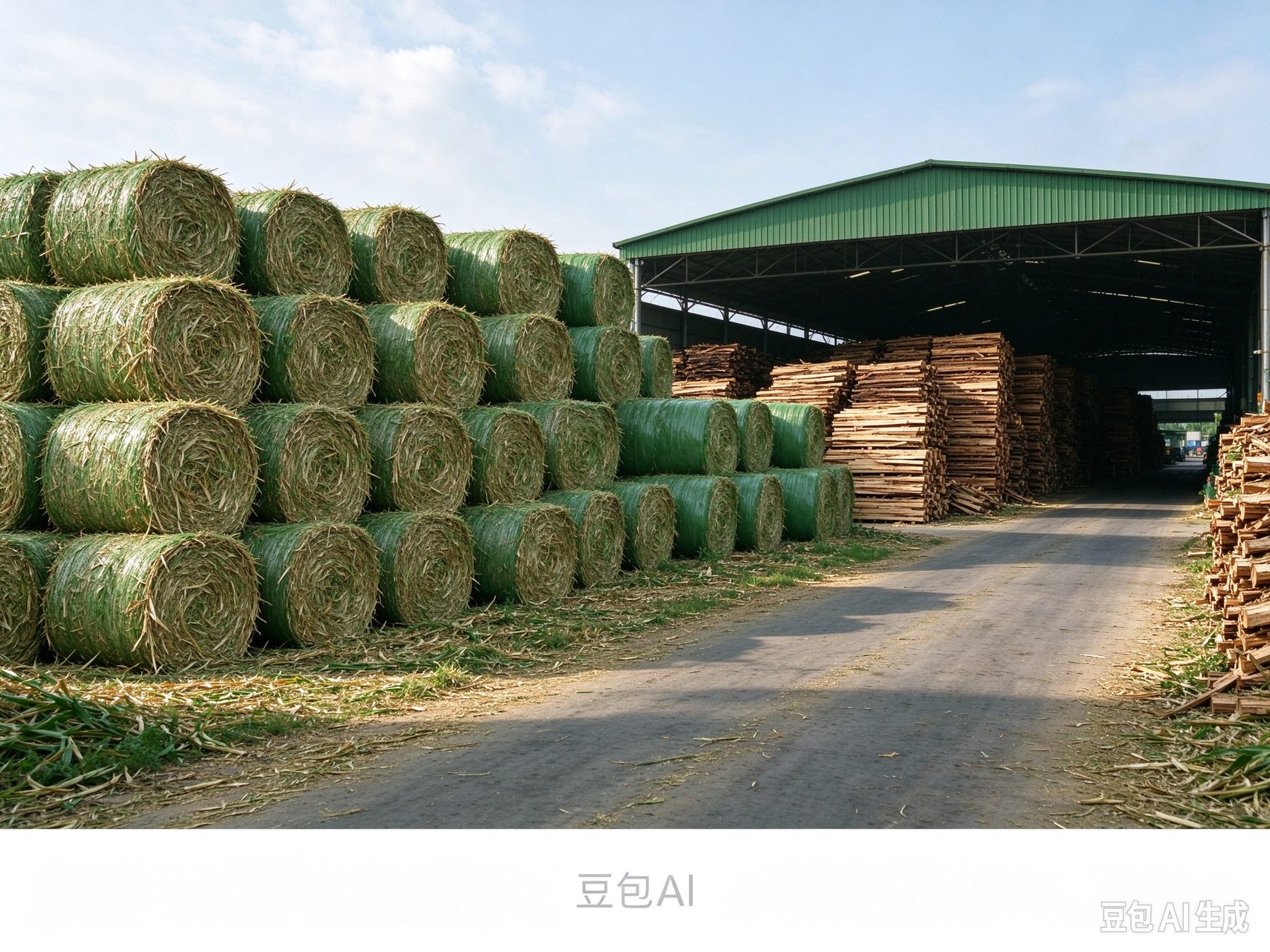
广州市花都区坚持城市全域统筹,把皮革边角料、盆景枯枝等固废治理纳入全区减污降碳总体布局,打通源头分类、规范收运、资源化处置全链条,把治理服务下沉到产业园区、企业车间、盆景基地、农户一线。
花都区是全国知名“中国皮具之都”,皮革边角料、废旧布料等一般工业固废产出量大,存在企业处置成本高、乱堆乱倒、环境风险隐患等问题;同时,花都区又是岭南派盆景核心产区,盆景修剪枯枝、绿化树枝产出分散,以往多依靠种植农户自行处置,露天焚烧现象屡禁不止,既带来颗粒物、VOCs、一氧化碳等大气污染,也造成生物质资源浪费。
在狮岭镇,花都区强化工业固废源头管控,布局废皮革收集点20多个,覆盖主要产业园区、专业市场和企业集聚区,引导皮具生产企业落实固废分类归集、台账管理,压实产废主体责任;针对盆景产业,广泛发动盆景园、盆栽种植农户、绿化养护单位主动参与资源化利用,引导修剪枯枝规范投放,摒弃就地焚烧的传统处置方式,从源头减少面源大气污染。
面对农村建设用地紧张、标准化固定收集站点落地难的现实约束,花都区创新推行“废皮革收集点叠加盆景枯枝收集、地面规范堆存、定时集中清运”收运处置新模式,依托狮岭镇20多个废皮革收集点统一归集调度,并组织党员干部上门服务,着力打通盆景枯枝、工业边角料处置“最后一公里”。
在生态环境部门合规指导与技术帮扶下,辖区资源化利用企业已形成年产环保RDF燃料棒18万吨的能力,采用无胶水、无粘合剂冷压成型工艺,大幅削减挥发性有机物排放;产品采用75%狮岭箱包产业皮革边角料搭配25%盆景枯枝、农作物秸秆、废旧纺织品混合加工,热值可达18000kJ/kg。
数据显示,1吨RDF燃料棒可等效替代0.6吨标准煤,灰分仅18%,远低于煤炭80%的灰分占比,含硫量低,每吨燃料二氧化硫减排潜力达13千克SO₂,完全适配火电掺烧标准。每替代1吨煤炭开展火力发电,燃料侧可减少二氧化碳排放0.7吨;相关产能全部投入掺烧后,年二氧化碳减排超14万吨;每生产1吨燃料棒,可消纳0.2吨以上盆景枯枝等农林废弃物,年削减一氧化碳超百吨。
在经济维度,RDF燃料棒供给下游火电企业,每吨可节约成本约300元,契合国家《煤电低碳化改造建设行动方案(2024—2027年)》要求,可实现电厂10%稳定生物质掺烧,助力区域煤电能源结构低碳转型。花都区表示,下一步将持续深化政企协同联动,以点带面,持续拓展固废资源化对全区减污降碳的贡献度。
Huadu District of Guangzhou adheres to comprehensive urban planning, incorporating the management of solid wastes such as leather scraps and bonsai pruning branches into the overall framework for pollution reduction and carbon reduction across the district. It establishes a full chain from source classification, standardized collection and transportation, to resource-based disposal, and extends governance services down to industrial parks, enterprise workshops, bonsai bases, and the frontlines of farmers.
Huadu District is nationally known as the 'Chinese Leather Capital,' and generates large amounts of general industrial solid waste such as leather scraps and old fabrics, facing issues such as high disposal costs for enterprises, random dumping, and environmental risk hazards. At the same time, Huadu District is the core area for the Lingnan-style bonsai industry, producing scattered bonsai pruning branches and green tree trimmings. Previously, these were mostly handled by farmers themselves, and open-air burning was common and difficult to curb, causing air pollution from particulate matter, VOCs, and carbon monoxide, as well as wasting biomass resources.
In Shiling Town, Huadu District has strengthened the source-level management of industrial solid waste, establishing more than 20 waste leather collection points covering major industrial parks, specialized markets, and enterprise clusters. This guides leather goods manufacturers to implement classified collection and ledger management of solid waste, reinforcing the responsibility of waste generation entities. For the bonsai industry, the district widely mobilizes bonsai gardens, potted plant growers, and landscaping maintenance units to actively participate in resource utilization, encourages proper disposal of pruned dead branches, and eliminates the traditional practice of on-site burning, thereby reducing diffuse air pollution from the source.
Faced with the practical constraints of limited rural construction land and the difficulty of establishing standardized fixed collection stations, Huadu District has innovatively launched a new collection and disposal model of “overlapping waste leather collection points with bonsai dead branch collection, standardized on-ground storage, and scheduled centralized removal.” This model relies on over 20 waste leather collection points in Shiling Town for unified collection and scheduling, while organizing party members and cadres to provide door-to-door services, aiming to resolve the 'last mile' issues in disposing of bonsai dead branches and industrial offcuts.
Under the compliance guidance and technical support of the ecological and environmental departments, resource-utilization enterprises in the jurisdiction have formed the capacity to produce 180,000 tons of environmentally friendly RDF fuel rods annually. They use a glue-free, adhesive-free cold pressing molding process, significantly reducing volatile organic compound emissions. The product is made by mixing 75% leather scraps from the Shiling luggage industry with 25% bonsai dead branches, crop straw, and waste textiles, reaching a calorific value of up to 18,000 kJ/kg.
Data shows that 1 ton of RDF fuel rods can replace 0.6 tons of standard coal, with an ash content of only 18%, much lower than coal’s 80% ash content. The sulfur content is low, and the potential reduction of sulfur dioxide per ton of fuel reaches 13 kg SO₂, fully meeting the standards for co-firing in thermal power plants. For every ton of coal replaced in power generation, CO₂ emissions on the fuel side can be reduced by 0.7 tons; if all related capacity is used for co-firing, annual CO₂ reduction exceeds 140,000 tons. For every ton of fuel rods produced, more than 0.2 tons of bonsai dead branches and other agricultural and forestry waste can be utilized, reducing carbon monoxide emissions by over 100 tons annually.
From an economic perspective, under the supply of RDF fuel rods to downstream thermal power enterprises, each ton can save about 300 yuan in costs, meeting the requirements of the national 'Action Plan for Low-Carbon Reconstruction of Coal-fired Power (2024–2027),' and realizing 10% stable biomass co-firing in power plants, helping the region's coal power energy structure transition to low-carbon. Huadu District stated that the next step will be to continue deepening the collaboration between government and enterprises, using pilot projects to drive broader implementation, and continuously expand the contribution of solid waste resource utilization to the district's pollution reduction and carbon reduction efforts.
[Source: Guangzhou Ecology and Environment]
[Editor: Xiao Neng]
本网站摘录或转载的属于第三方的信息,目的在于传递更多信息,内容仅供参考。相关股票、投融资等资讯及分析并不代表本网站赞同其意见和对其真实性负责,不构成投资建议。
若不慎涉及侵权,请在相关内容刊发之日起 30 日内联系我们,我们将第一时间进行删除处理。
转载本网资讯请注明来源作者。本网原创文章、研究报告禁止转发。
Information excerpted or reprinted from third parties on this website is intended to convey more information for reference only. Related stocks, investment and financing news and analysis do not represent the endorsement of this website, nor does this website assume responsibility for their authenticity, and do not constitute investment advice.
If any content unintentionally infringes upon rights, please contact us within 30 days from the date of publication, and we will remove it as soon as possible.
When reprinting content from this website, please indicate the source and author. Original articles and research reports of this website may not be redistributed.
数据来源与口径说明:本平台数据与资讯均以「唯一官方口径」采集与发布,优先采用国家部委、国家统计局、海关总署、中国氢能联盟、IEA / IRENA / IMO 等官方或政府间机构公开数据;同一指标只取一个来源,不做多源拼接。数值为公开发布值,可能因统计口径、产地与发布时间不同而存在差异,仅供参考,不构成交易依据。Data sources and methodology: all data and news on this platform are collected and published from a single official source, giving priority to public data from government bodies and intergovernmental organisations such as the National Bureau of Statistics, the General Administration of Customs, the China Hydrogen Alliance, and IEA / IRENA / IMO. One indicator has one source only and is never stitched together from multiple sources. Figures are published values and may vary with statistical scope, origin and release date. For reference only; not a basis for transactions.
相关信息Related Information同栏目 · 可直接进入各自最终页Same section · each opens its own final page
- 3.54亿个绿证与3个月期限:可再生能源消费最低比重目标怎么考核绿氢与氢基燃料
- 255万千瓦与135万吨:通辽给“绿电+电解铝”出了一道新题2026-10-03
- 湖南:多用户绿电直连优先支持算力、绿氢氨醇、零碳园区,实现小时级绿电溯源对接绿证2026-09-19
- 《绿色甲醇》行业标准及三项团体标准发布实施 填补国内标准空白绿色甲醇Green Methanol
- 印度发布绿氨与绿色甲醇国家标准 设定0.38与0.44千克二氧化碳当量排放阈值绿色甲醇Green Methanol
- 美国能源部发布45VH2-GREET 2025年12月版核算手册 明确氨、甲醇转化情形的氢排放口径绿色甲醇Green Methanol