
五城市群启动氢能综合应用试点 氢能加速向工业领域延伸Five urban clusters launch comprehensive hydrogen energy application pilot programs, accelerating hydrogen energy's extension into the industrial sector
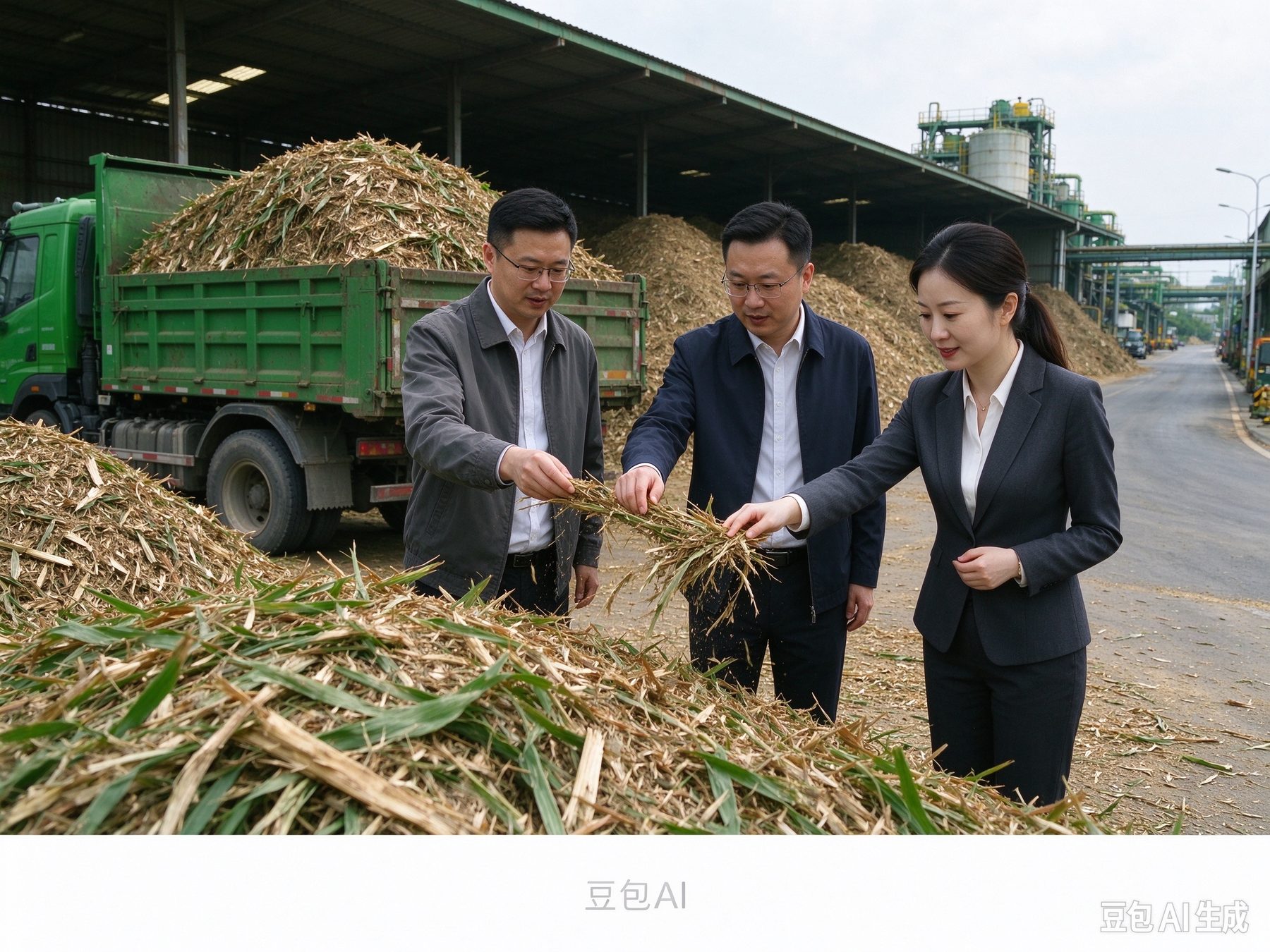
近日,工业和信息化部、财政部、国家发展改革委正式批复京津冀、大湾区、东北(含蒙东)—长三角、新疆—成渝地区双城经济圈、黄河几字弯—中原等5个城市群启动氢能综合应用试点工作,试点为期4年。此举为我国氢能商业化落地按下加速键,标志着我国氢能产业从“燃料电池汽车单点突破”正式迈入“多元场景规模化应用”新阶段,氢能产业的规模化落地正从过去相对集中的交通端,进一步向工业用氢这一更大规模的需求市场延伸。
中国汽车战略与政策研究中心技术总监王佳表示,之所以选择这5个城市群作为试点,本质上是想推动氢能走出车端应用的单一场景,从而进入工业领域节能降碳的核心地带,真正实现从“示范先行”到“规模应用”的跨越。
据了解,这五大城市群呈现“2+3”发展格局:京津冀与大湾区以氢能交通应用示范为核心,重点聚焦燃料电池汽车推广及氢能高速、氢走廊规划建设;东北(含蒙东)—长三角、新疆—成渝地区双城经济圈、黄河几字弯—中原三大城市群则侧重工业应用示范推广,重点推动绿色氨醇、氢基化工原料替代、氢冶金、掺氢燃烧等工业应用。
中国产业发展促进会副会长兼氢能分会主任委员魏锁认为,这一“2+3”格局的形成,是国家对氢能的战略定位随产业实践深化而不断具体化的结果。“十四五”时期,我国氢能实现“从0到1”的突破,进入跨越技术经济拐点、快速规模化发展的关键阶段。据统计,截至2026年8月,我国燃料电池汽车累计销量已超过4万辆,累计建成加氢站超620座,位居全球首位。
迈入“十五五”,碳达峰进入攻坚期,工业深度脱碳成为刚性要求,氢能应用场景从交通向工业等多元领域拓展。今年3月,三部门联合印发《关于开展氢能综合应用试点工作的通知》,明确打造“1+N+X”的氢能综合应用生态。中关村氢能产业联盟秘书长卢琛钰表示,“1”是延续上一轮的氢燃料电池汽车,“N”(绿色氨醇、氢基化工原料替代、氢冶金、掺氢燃烧)则是这一轮氢能消纳的主要战场,这四大工业领域将是未来氢能消纳占比最高的方向。
从港口到工厂,氢能应用正“多点开花”。在天津第一座商用综合能源站——荣程新能加氢站,一辆辆氢能重卡有序加氢,20分钟就可以加满。其运输线路为“天津港—邯郸—长治—荣程”氢能零碳双向运输通道,采用氢能重卡从天津港装上铁矿石,运抵河北邯郸武安主要钢铁产地,再从长治装上焦炭送回荣程钢铁厂区,形成天津、河北、山西等多个点位间公路物流零碳运输的新模式。荣程新能总经理助理田建广介绍,该站点每天加氢超过两吨,通过提升加氢规模摊薄固定投资,实现项目经济平衡;全链条若无法协同联动,单一项目难以实现持续盈利。
在四川,博能燃气建成国内运营规模最大的城镇燃气掺氢示范项目,实现全省首例5%比例掺氢;街头巷尾,“氢马儿”已投运1.5万辆、规模居全国首位,氢能两轮车零排放无污染,续航可达百公里。此外,内蒙古赤峰、吉林大安、吉林松原等地绿色氨醇项目已陆续投运,内蒙古多伦绿氢耦合煤化工一体化项目落地,广东湛江、河北张家口、辽宁营口等地氢冶金项目也已全线贯通。
随着试点城市群的批复,我国氢能产业向更大范围、更深层次的应用探索迈出重要一步,未来这场跨区域、多场景、全链条的试点,将从产业格局、技术迭代、商业逻辑三个维度重塑我国氢能产业。卢琛钰表示,接下来企业最核心的问题是降本,不仅体现在氢气价格降下来,装备成本也应逐步降低,目前氢燃料电池价格持续下降,多家企业的电堆价格已降到千元以内,电解槽系统核心装备最新招标价已降到300万至400万元。王佳则认为,试点设置了严格的绩效评价与退出机制,中央资金跟着进度走、跟着绩效走,在四年窗口期内跑通自身商业逻辑,才是决定“十五五”能否站稳脚跟的关键。
Recently, the Ministry of Industry and Information Technology, the Ministry of Finance, and the National Development and Reform Commission officially approved the launch of hydrogen energy comprehensive application pilot programs in five urban agglomerations: Beijing-Tianjin-Hebei, the Greater Bay Area, Northeast China (including Eastern Inner Mongolia)–Yangtze River Delta, Xinjiang–Chengdu-Chongqing region twin-city economic circle, and the Yellow River bends–Central Plains. The pilot programs will last for four years. This move accelerates the commercialization of hydrogen energy in China, marking the country's hydrogen industry’s transition from "breakthroughs in fuel cell vehicles at isolated points" to a new phase of "large-scale applications across multiple scenarios." The large-scale adoption of hydrogen energy is expanding from the previously relatively concentrated transportation sector to the larger demand market of industrial hydrogen use.
Wang Jia, Technical Director of the China Automotive Strategy & Policy Research Center, stated that the reason for selecting these five urban agglomerations as pilots is essentially to promote hydrogen energy beyond its single-use application in vehicles, thereby entering the core areas of industrial energy savings and carbon reduction, truly achieving a leap from "demonstration-first" to "large-scale application."
It is reported that these five major city clusters present a '2+3' development pattern: the Beijing-Tianjin-Hebei region and the Greater Bay Area focus on hydrogen energy transportation application demonstrations, with an emphasis on promoting fuel cell vehicles and planning and constructing hydrogen highways and hydrogen corridors; the Northeast (including eastern Inner Mongolia)–Yangtze River Delta, Xinjiang–Chengdu-Chongqing Twin City Economic Circle, and the Yellow River Bend–Central Plains city clusters focus on industrial application demonstration and promotion, with a priority on advancing industrial applications such as green ammonia, hydrogen-based chemical raw material substitution, hydrogen metallurgy, and hydrogen-blended combustion. Wei Suo, vice president of the China Industrial Development Promotion Association and chairman of the Hydrogen Energy Committee, believes that the formation of this '2+3' pattern is the result of the national strategic positioning of hydrogen energy becoming increasingly concrete as industry practice deepens. During the '14th Five-Year Plan' period, China has achieved a breakthrough in hydrogen energy 'from 0 to 1,' entering a critical stage of rapid scaling and crossing the technology-economic inflection point. According to statistics, by August 2026, China’s cumulative sales of fuel cell vehicles have exceeded 40,000 units, and more than 620 hydrogen refueling stations have been built, ranking first in the world.
Entering the 15th Five-Year Plan period, reaching peak carbon emissions has entered a critical stage, and deep decarbonization of industry has become a rigid requirement. Hydrogen energy application scenarios are expanding from transportation to diverse areas such as industry. In March of this year, three departments jointly issued the "Notice on Carrying Out Comprehensive Hydrogen Energy Application Pilot Work," clearly aiming to build a '1 N X' comprehensive hydrogen energy application ecosystem. Lu Chenyu, Secretary-General of the Zhongguancun Hydrogen Energy Industry Alliance, stated that '1' continues the previous round of hydrogen fuel cell vehicles, while 'N' (green ammonia, replacement of hydrogen-based chemical raw materials, hydrogen metallurgy, hydrogen-blended combustion) is the main battlefield for this round of hydrogen energy consumption. These four industrial areas will be the directions with the highest proportion of hydrogen energy utilization in the future.
From the port to the factory, hydrogen energy applications are 'blossoming in multiple locations.' At Tianjin's first commercial integrated energy station—the Rongcheng New Energy Hydrogen Refueling Station—hydrogen heavy trucks are refueled in an orderly manner, taking only 20 minutes to fill up. Its transport route is the 'Tianjin Port—Handan—Changzhi—Rongcheng' zero-carbon bidirectional hydrogen transport corridor, using hydrogen heavy trucks to carry iron ore from Tianjin Port to Wuan, Handan, Hebei, a major steel production area, and then loading coke from Changzhi back to the Rongcheng steel plant, creating a new model of zero-carbon road logistics among multiple locations including Tianjin, Hebei, and Shanxi. Tian Jianguang, Assistant General Manager of Rongcheng New Energy, introduced that the station refuels over two tons of hydrogen daily, and by increasing refueling scale, it spreads out fixed investments and achieves project economic balance; if the entire chain cannot coordinate and link together, a single project is difficult to sustain profitability.
In Sichuan, Boneng Gas has completed the country's largest urban gas hydrogen blending demonstration project in operation, achieving the province's first 5% hydrogen blending; on the streets and alleys, 15,000 'hydrogen scooters' have been put into operation, ranking first in the country, with zero emissions and pollution, and a range of up to 100 kilometers. In addition, green ammonia projects in Chifeng, Inner Mongolia; Da'an and Songyuan, Jilin; have been gradually put into operation, the integrated green hydrogen and coal chemical project in Duolun, Inner Mongolia has been established, and hydrogen metallurgy projects in Zhanjiang, Guangdong; Zhangjiakou, Hebei; and Yingkou, Liaoning have also been fully connected.
With the approval of pilot city clusters, China's hydrogen energy industry has taken an important step toward broader and deeper applications. In the future, this cross-regional, multi-scenario, full-chain pilot will reshape China's hydrogen energy industry in terms of industrial structure, technological iteration, and business logic. Lu Chenyu stated that the most core issue for enterprises moving forward is cost reduction, which not only involves lowering hydrogen prices but also gradually reducing equipment costs. Currently, the prices of hydrogen fuel cells continue to decline, with several companies’ fuel cell stack prices dropping below 1,000 yuan, and the latest tender prices for key equipment in electrolyzer systems have fallen to 3 to 4 million yuan. Wang Jia believes that the pilot has set strict performance evaluation and exit mechanisms, with central funds following progress and performance. Successfully running their own business logic within the four-year window is key to whether the "15th Five-Year Plan" can gain a firm footing.
[Source: China Energy News]
[Editor: Xiao Neng]
本网站摘录或转载的属于第三方的信息,目的在于传递更多信息,内容仅供参考。相关股票、投融资等资讯及分析并不代表本网站赞同其意见和对其真实性负责,不构成投资建议。
若不慎涉及侵权,请在相关内容刊发之日起 30 日内联系我们,我们将第一时间进行删除处理。
转载本网资讯请注明来源作者。本网原创文章、研究报告禁止转发。
Information excerpted or reprinted from third parties on this website is intended to convey more information for reference only. Related stocks, investment and financing news and analysis do not represent the endorsement of this website, nor does this website assume responsibility for their authenticity, and do not constitute investment advice.
If any content unintentionally infringes upon rights, please contact us within 30 days from the date of publication, and we will remove it as soon as possible.
When reprinting content from this website, please indicate the source and author. Original articles and research reports of this website may not be redistributed.
数据来源与口径说明:本平台数据与资讯均以「唯一官方口径」采集与发布,优先采用国家部委、国家统计局、海关总署、中国氢能联盟、IEA / IRENA / IMO 等官方或政府间机构公开数据;同一指标只取一个来源,不做多源拼接。数值为公开发布值,可能因统计口径、产地与发布时间不同而存在差异,仅供参考,不构成交易依据。Data sources and methodology: all data and news on this platform are collected and published from a single official source, giving priority to public data from government bodies and intergovernmental organisations such as the National Bureau of Statistics, the General Administration of Customs, the China Hydrogen Alliance, and IEA / IRENA / IMO. One indicator has one source only and is never stitched together from multiple sources. Figures are published values and may vary with statistical scope, origin and release date. For reference only; not a basis for transactions.
相关信息Related Information同栏目 · 可直接进入各自最终页Same section · each opens its own final page
- 河南三城入选国家氢能试点2026-10-12
- 河南三城“氢”装上阵 郑州、鄂尔多斯建立“双主责”协同机制绿氢与氢基燃料
- 多用户绿电直连项目申报启动!石家庄钢铁、石化、零碳园区等迎来绿电利用新机遇绿氢与氢基燃料
- 我国氢能产业进入发展快车道绿氢与氢基燃料
- 工信部《工业绿色低碳发展“十五五”规划》:2030年工业碳达峰与500个零碳工厂绿氢与氢基燃料
- 内蒙古唯一、全国3个全链条试点之一 包头氢能产业向新向优绿氢与氢基燃料