
绿电直供的两道算术题:零碳园区从示范名单走向验收的工程账Two arithmetic questions of direct green electricity supply: The project account of zero-carbon parks moving from the demonstration list to acceptance
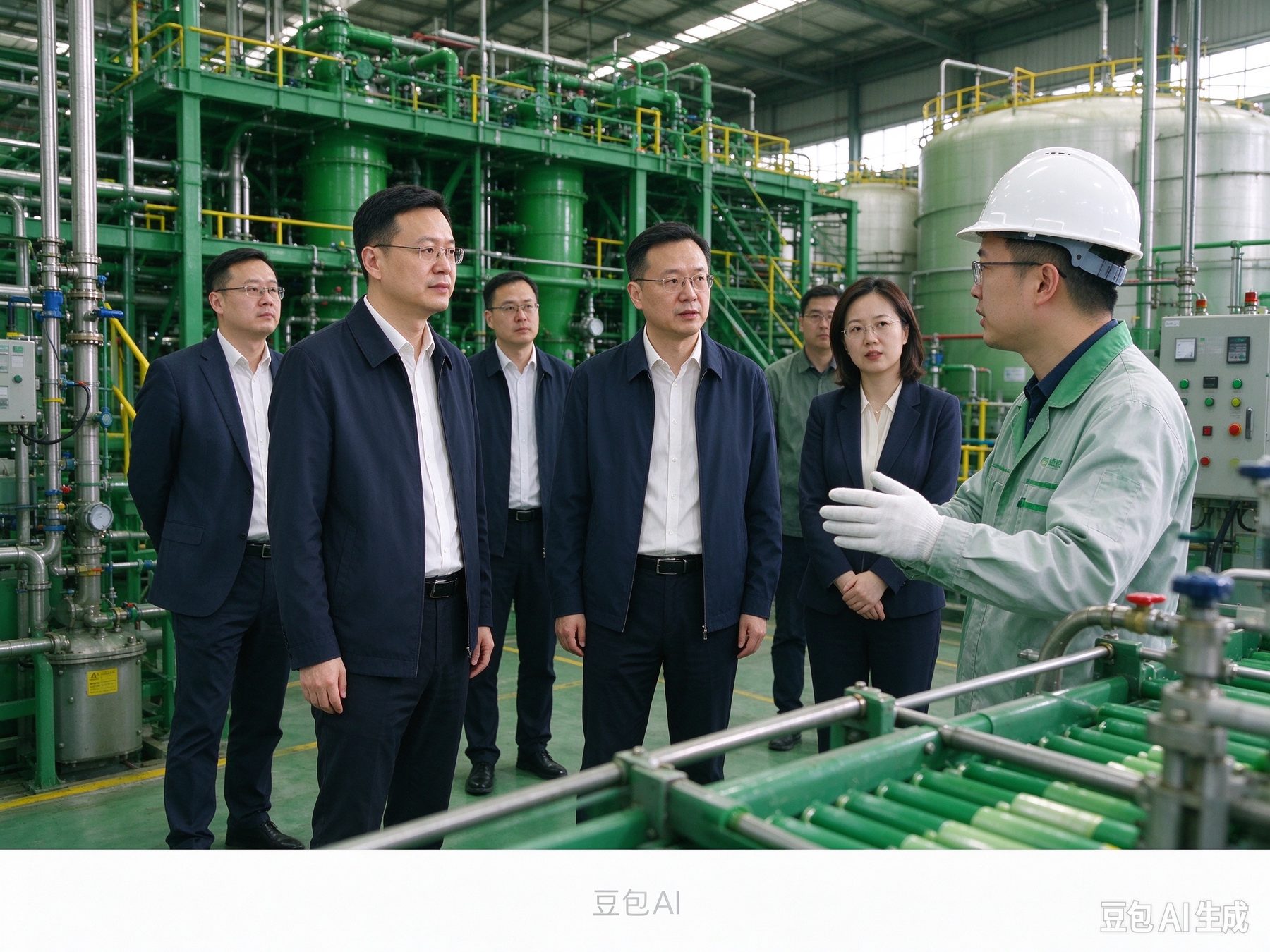
零碳园区从进入建设名单到真正通过验收,中间横着两道必须算清楚的算术题。2026年11月4日,江苏省发展改革委、工业和信息化厅联合印发省级零碳园区建设名单,全省44个园区入围,盐城有11家园区入选,数量占全省四分之一;此前2025年12月26日,国家发展改革委办公厅、工业和信息化部办公厅、国家能源局综合司已联合印发《国家级零碳园区建设名单(第一批)》,共纳入52个园区。第一道算术题是碳排放强度:国家级零碳园区建设指标体系把单位能耗碳排放设为核心指标,年综合能源消费量20万至100万吨标准煤的园区要求不大于0.2吨每吨标准煤,100万吨标准煤以上的园区要求不大于0.3吨每吨标准煤。第二道算术题是绿电的来路与归属:指标体系明确园区用电应优先通过绿色电力直接供应满足,原则上直接供应比例不低于50%,并推动绿电直连、新能源就近接入增量配电网等模式落地。这两道题一道比强度,一道比证据,答案都落在工程细节上。
强度这道题:山西园区的差距在十倍量级
2026年11月4日,山西省能源研究会举办绿电园区与零碳园区落地实践专题研讨会,披露的一组数据把强度这道题的难度摆到了台面上:山西已形成2个国家级零碳园区、7个省级零碳园区、13个绿电园区试点的三级梯队,但9家零碳园区的单位能耗碳排放分布在1.48至3.34吨二氧化碳每吨标准煤之间。相比0.2至0.3吨每吨标准煤的准入红线,最低的一家仍高出五倍以上,最高的那家高出十倍以上。这不是统计口径的问题,而是产业结构的问题。
据山西省投资规划研究院有限公司正高级工程师张志雄在同场研讨会上的介绍,山西全省71家省级以上工业开发区能耗占全省总量的46%,折算碳排放约2.6亿吨,接近全省一半。园区碳排放水平直接决定全省碳排放水平,要在一个以冶金、焦化、煤炭为产业底色的省份把园区单位能耗碳排放压到0.3以内,光靠换电源换不动,必须同时改工艺、改燃料、改装备。山西能源学院新能源产业学院执行院长王康民介绍,大同经开区已经形成2026年到2030年零碳园区的专项规划,以园中园的方式统筹产业布局、能源系统、基础建设和产业发展,衔接供能条件、项目持续、企业需求;阳泉高新区则在21.65平方公里统筹范围内推进26个重点支撑项目,聚焦配电网升级、绿电直连和企业用能需求。
从技术账上看,重载能园区的电气化改造成本约为轻工业园区的三至五倍。冶金与焦化的工艺流程依赖化石燃料热源,焦炭炼铁与高温裂解不是简单通电就能替代的,需要对整个反应炉、热交换器乃至整套生产线进行系统性重写。这笔账在技术层面无法通过优化绕过,只能通过工艺路线的分步替换来消化——先做能效提升与资源循环利用,再做“绿电替代”,最后才是在具备条件的环节做“绿电直连”。
证据这道题:物理溯源为什么比绿证更硬
第二道题比第一道更微妙,因为它考的不是强度而是证据链。欧盟碳边境调节机制逐步落地,出口产品的碳足迹核算越来越严,生产环节的绿电使用比例直接影响碳成本,园区引入国际认证机构、推进产品碳足迹核算评价与认证标准的互通互认,让企业不出园区就能拿到被国际市场认可的绿色凭证。但绿电本身不构成凭证,凭证来自可验证的物理路径。
大丰港零碳产业园的做法是把这条链做成了工程。公开信息显示,该园区建成全国首个园区级“一对多”绿电直供生产应用场景,先导区1.4平方公里已全面实现绿电直供,累计完成2300万度“物理可溯源”绿电,先导区国际合作零碳产业园绿电溯源比例达75%,先导区碳因子为0.14吨二氧化碳每兆瓦时,较全国平均水平下降75%以上;园区联动SGS等国际机构开展产品碳足迹认证。园区运营公司招商部主任葛军介绍,园区利用大丰港丰富的风光绿电资源与国网密切合作,实现绿电物理可溯源、高比例、稳定消纳,获得英国标准协会绿电直连审定声明,并正在开展小时级绿电交易试点,让企业清晰掌握所使用绿电的发电场站、发电时段和电量流向,做到来源可查、流向可追、数据可证。
园区企业的收益逻辑因此是双重的。江苏步路电动科技有限公司客户经理胡金明介绍,企业依托大丰港零碳产业园专属绿电专线实现光伏清洁电力稳定直供生产,新能源电价成本降到30%以下;同时从碳足迹和绿电可溯源来讲,符合出口标准,能有效对冲国外碳关税带来的压力,帮助企业降低综合出口成本。这两个数字放在一起才有意义——单看电价降三成不足以构成迁园理由,单看碳关税压力也缺少落地的技术载体,物理可溯源的直供专线把两者绑在了一起。
网架这道题:专线、专变与增量配电网的三种做法
绿电直连在工程上有三种不同的实现形态,适用条件差别很大。第一种是一对一企业专线直连,专线从电源侧直达单一企业负荷侧,物理路径最短、溯源最容易,但电源与负荷必须一对一匹配,任何一侧的出力或用能波动都会直接影响另一侧,容错空间最小。第二种是一对多园区集中供能,由园区统一从电网取电并在内部按物理分区分配给各企业,这需要专线上的电压、频率、电能质量由园区的储能配置与动态无功补偿来稳定住,否则波动的新能源出力会直接影响以制造业负荷为主的园区供电质量。第三种是新能源就近接入增量配电网,由园区内的增量配电公司组织供电,园区作为统一配电网单元就近消纳、公网作为补充备用。
三种做法的分水岭在于电源与负荷的耦合紧密度与园区对电价的控制力。一对一专线的溯源最容易但规模化难;一对多集中供能解决了规模问题但把电能质量压力集中到了园区侧的储能配置上;增量配电网模式让园区成为一个独立调度单元,电源组织更灵活,但对增量配电公司的运营能力与地方政策配套要求更高。技术上的关键判断是,绿电直供做得成做不成,不取决于园区建了多少光伏,而取决于园区有没有能力把负荷的功率波动特征与电源的出力特征在时间上对齐——工业负荷如果是连续可调的,匹配难度远低于脉冲式的。
从设备侧看,盐城大丰港的路径是围绕220千伏围海变、丹桂变双核绿电专变网架展开,推行一对一企业专线直连与一对多园区集中供能两种模式,目标是在十五五期间推动70万千瓦海上风电直供园区,2030年园区绿电可溯源占比达到60%至80%。公开信息同时披露,园区源网荷储一体化新型电力系统示范工程已建成13.76兆瓦光伏电站及配套储能,配套天合光能零碳解决方案平台年发绿电超1870万度,并已通过英国标准协会审定与认证。这类数字的实际意义在于它们是可核验的硬件存在,而不是规划口径的意向。
研判:零碳园区技术路线的分水岭
把三道题合起来看,零碳园区的技术路线分水岭已经相当清晰。可溯源性决定园区能不能服务出口导向企业,供电结构决定园区能不能压住单位能耗碳排放,产业负荷性质决定改造成本能不能被消化。三者之中,可溯源性是最容易被低估的一项。它不产生直接的降碳量,却在碳边境调节机制进入实质收费阶段后,成为园区与普通园区之间最实际的差别——同样是零碳,能拿出国际认可的证据和拿不出的,市场给的溢价完全不同。
第二项判断与产业负荷强相关。轻工、储能装备、出口制造这类中等耗能企业,对绿电直连的响应最直接,因为它们既需要稳定供电又有明确的碳足迹披露压力,改造收益与成本的比例最好。而极高耗能重工业园区的核心诉求是降低工业用电成本与开发减排量,对外贸碳足迹没有刚性需求,溯源认证的溢价很难转化为收益,因此不能简单照搬沿海出口型园区的模式。山西9家园区的现实处境正说明这一点:其单位能耗碳排放仍在1.48至3.34吨每吨标准煤之间,改造的主战场在工艺与装备端,绿电直连只是其中的一个变量。
第三项判断涉及时间。首批52个国家级零碳园区的建设周期为3至5年,这意味着现在公布的这批名单标志的是建设期的开始,而不是零碳目标的达成。盐城把大丰港的验收目标锚定在2027年通过验收,属于相对激进的排期,其前提是绿电专线改造、企业专线接入、能碳计量与碳盘查服务四条线同时推进。这四条线的推进速度实际上由同一件事决定——园区的能碳管理平台能否把计量数据做成企业随手可用的碳盘查报告。凡是数据不能自动生成报告的园区,认证周期都会被拖长,因为碳服务的边际成本恰恰不在核查本身,而在数据整理。
本文参考资料来源于盐城市人民政府、大丰区人民政府、国家发展改革委、工业和信息化部、国家能源局、鄂尔多斯市人民政府公开发布的零碳园区建设名单、指标体系与支持方案文件;大丰港零碳产业园园区运营公司、江苏步路电动科技有限公司、山西省投资规划研究院等公开发布的项目与数据说明;中国新闻网、中国能源报等媒体公开报道。
From being listed for construction to actually passing acceptance, zero-carbon parks have to solve two arithmetic problems along the way. On November 4, 2026, the Jiangsu Provincial Development and Reform Commission and the Department of Industry and Information Technology jointly issued the list of provincial zero-carbon park constructions. A total of 44 parks in the province were shortlisted, with 11 from Yancheng, accounting for a quarter of the total. Previously, on December 26, 2025, the General Office of the National Development and Reform Commission, the General Office of the Ministry of Industry and Information Technology, and the Comprehensive Department of the National Energy Administration jointly issued the "List of National Zero-Carbon Park Constructions (First Batch)," which included 52 parks in total. The first arithmetic problem is carbon emission intensity: the national zero-carbon park construction indicator system sets carbon emissions per unit of energy consumption as the core indicator. For parks with an annual comprehensive energy consumption of 200,000 to 1 million tons of standard coal, the requirement is not more than 0.2 tons per ton of standard coal; for parks with more than 1 million tons of standard coal, the requirement is not more than 0.3 tons per ton of standard coal.
The second arithmetic problem concerns the source and ownership of green electricity: The indicator system clarifies that the electricity consumption in the park should preferably be met through direct supply from green power, with a principle that the proportion of direct supply should not be less than 50%, and to promote the implementation of models such as direct green power connection and nearby access of renewable energy to the incremental distribution network. These two problems are one about intensity, the other about evidence, and the answers both lie in engineering details.
The intensity problem: The gap in Shanxi parks is on the order of tenfold.
On November 4, 2026, the Shanxi Energy Research Association held a seminar on the practical implementation of green power parks and zero-carbon parks. A set of data revealed the difficulty of this intensity problem: Shanxi has formed a three-tier system with 2 national-level zero-carbon parks, 7 provincial-level zero-carbon parks, and 13 green power park pilot sites. However, among the 9 zero-carbon parks, the unit energy consumption carbon emissions range from 1.48 to 3.34 tons of CO2 per ton of standard coal. Compared with the access threshold of 0.2 to 0.3 tons per ton of standard coal, the lowest one still exceeds it by more than five times, and the highest exceeds it by more than ten times. This is not an issue of statistical methodology, but an issue of industrial structure.
According to Zhang Zhixiong, a senior engineer at Shanxi Provincial Investment Planning Research Institute Co., Ltd., who spoke at the same seminar, the 71 industrial development zones at the provincial level or above in Shanxi account for 46% of the province's total energy consumption, equivalent to approximately 260 million tons of carbon emissions, nearly half of the province's total. The carbon emission levels of these zones directly determine the province's overall carbon emissions. In a province whose industrial foundation is based on metallurgy, coking, and coal, reducing carbon emissions per unit of energy consumption in industrial parks to below 0.3 cannot be achieved merely by changing the energy source; it also requires changes in processes, fuels, and equipment. Wang Kangmin, Executive Dean of the New Energy Industry School at Shanxi Energy College, introduced that Datong Economic Development Zone has already formulated a specialized plan for zero-carbon parks from 2026 to 2030, coordinating industrial layout, energy systems, infrastructure, and industrial development in a 'park within a park' approach to align energy supply conditions, project continuity, and enterprise demand. Meanwhile, Yangquan High-Tech Industrial Zone is advancing 26 key support projects within a 21.65-square-kilometer area, focusing on upgrading the distribution network, connecting green electricity directly, and meeting enterprises' energy needs.
From a technical accounting perspective, the electrification retrofit cost of a heavy-load energy park is about three to five times that of a light industrial park. The metallurgical and coking processes rely on fossil fuel heat sources; coke ironmaking and high-temperature cracking cannot simply be replaced by electrification. The entire reaction furnace, heat exchanger, and even the entire production line need to be systematically redesigned. This cost cannot be bypassed through optimization at the technical level and can only be absorbed through step-by-step replacement of the process route—first improve energy efficiency and resource recycling, then carry out 'green electricity replacement,' and finally implement 'direct green electricity connection' in suitable sections.
Evidence for this issue: Why physical traceability is more robust than green certificates.
The second question is more subtle than the first because it tests not the intensity but the chain of evidence. As the EU Carbon Border Adjustment Mechanism is gradually implemented, the carbon footprint accounting for exported products is becoming increasingly strict. The proportion of green electricity used in the production process directly affects carbon costs. Introducing international certification bodies into industrial parks and promoting mutual recognition between product carbon footprint accounting, evaluation, and certification standards allows companies to obtain internationally recognized green certificates without leaving the park. However, green electricity itself does not constitute a certificate; the certificate comes from a verifiable physical path.
The approach of Dafeng Port Zero-Carbon Industrial Park is to treat this chain as an engineering project. Public information shows that the park has established the nation’s first park-level 'one-to-many' green electricity direct supply production application scenario. The pilot area of 1.4 square kilometers has fully achieved direct green electricity supply, cumulatively completing 23 million kWh of 'physically traceable' green electricity. The international cooperation zero-carbon industrial park in the pilot area has a green electricity traceability rate of 75%, and the carbon factor in the pilot area is 0.14 tons of CO₂ per megawatt-hour, which is more than 75% lower than the national average. The park has collaborated with international organizations such as SGS to carry out product carbon footprint certification. Ge Jun, director of the park's investment promotion department, introduced that the park utilizes the abundant wind and solar green electricity resources of Dafeng Port and works closely with the State Grid to achieve physically traceable, high-proportion, and stable consumption of green electricity. The park has obtained the British Standards Institution's green electricity direct connection statement and is currently conducting a pilot project on hourly green electricity trading, allowing enterprises to clearly know the generation site, generation period, and electricity flow of the green electricity they use, ensuring that the source is verifiable, the flow is trackable, and the data is certifiable.
The revenue logic for companies in the park is therefore dual. Hu Jinming, account manager at Jiangsu Bulu Electric Technology Co., Ltd., explained that the company relies on the exclusive green electricity line of the Dafeng Port Zero-Carbon Industrial Park to achieve stable direct supply of photovoltaic clean power for production, reducing the cost of renewable energy electricity to below 30%. At the same time, in terms of carbon footprint and traceability of green electricity, it meets export standards, effectively offsetting the pressure brought by foreign carbon tariffs and helping companies reduce overall export costs. These two figures are only meaningful when viewed together—looking only at the 30% reduction in electricity costs is not sufficient reason to relocate the park, and looking only at carbon tariff pressure lacks a tangible technical carrier. The physically traceable dedicated supply line ties the two together.
The issue of grid structure: three approaches of dedicated line, dedicated transformer, and incremental distribution network.
There are three different implementation forms of green power direct connection in engineering, with significantly different applicable conditions. The first is a one-to-one enterprise dedicated line direct connection, where a dedicated line goes directly from the power source side to a single enterprise load side. This has the shortest physical path and the easiest traceability, but the power source and load must be matched one-to-one, and any fluctuation on either side will directly affect the other side, leaving minimal fault tolerance. The second is a one-to-many centralized energy supply in a park, where the park uniformly draws power from the grid and internally distributes it to each enterprise according to physical partitions. This requires the voltage, frequency, and power quality on the dedicated line to be stabilized by the park's energy storage configuration and dynamic reactive compensation, otherwise, the fluctuating output of renewable energy would directly affect the power quality of the park, which mainly serves manufacturing loads. The third is the nearby access of renewable energy to the incremental distribution network, where power supply is organized by the incremental distribution company within the park, with the park itself consuming energy nearby as a unified distribution grid unit, and the public network serving as a supplementary backup.
The watershed among the three approaches lies in the coupling tightness between power supply and load, and the park's control over electricity prices. Traceability is easiest with a dedicated one-to-one line, but scaling up is difficult; one-to-many centralized energy supply solves the scale problem but concentrates the pressure on power quality onto the park's energy storage configuration; the incremental distribution network model allows the park to become an independent dispatch unit, making power organization more flexible, but it places higher demands on the operational capabilities of incremental distribution companies and supporting local policies. The key technical judgment is that whether direct green power supply can work or not does not depend on how much photovoltaics the park has installed, but on whether the park has the ability to align the power fluctuation characteristics of the load with the output characteristics of the power supply in time — if industrial loads are continuously adjustable, the matching difficulty is much lower than for pulsed loads.
From the equipment side, the path of Yancheng Dafeng Port is built around the double-core green power dedicated transformer network of the 220 kV Weihai Substation and Dangui Substation, implementing two models: one-to-one direct enterprise dedicated lines and one-to-many centralized park energy supply. The goal is to promote 700,000 kW of offshore wind power directly supplying the park during the 15th Five-Year Plan period, with the traceable proportion of green power in the park reaching 60% to 80% by 2030. Public information also disclosed that the park's integrated source-grid-load-storage new power system demonstration project has built a 13.76 MW photovoltaic power station with supporting energy storage, along with the Trina Solar zero-carbon solution platform generating over 18.7 million kWh of green power annually, and it has been approved and certified by the British Standards Institution. The practical significance of such figures lies in the fact that they are verifiable hardware existences, rather than intentions in the planning scope.
Assessment: The watershed of the zero-carbon park technology route.
Looking at the three questions together, the technological path of a zero-carbon park has become quite clear. Traceability determines whether the park can serve export-oriented enterprises, the power supply structure determines whether the park can curb carbon emissions per unit of energy consumption, and the nature of the industrial load determines whether the transformation costs can be absorbed. Among the three, traceability is the easiest to underestimate. It does not produce direct carbon reductions, but once the Carbon Border Adjustment Mechanism enters the stage of substantial charges, it becomes the most practical difference between the park and ordinary parks—both are zero-carbon, but the market premium is completely different between those that can provide internationally recognized evidence and those that cannot.
The second judgment is strongly related to industry load. Medium-energy-consuming enterprises such as light industry, energy storage equipment, and export manufacturing respond most directly to direct green electricity connections because they require stable power supply and have clear carbon footprint disclosure pressures, making the ratio of renovation benefits to costs optimal. In contrast, the core demand of extremely high-energy-consuming heavy industrial parks is to reduce industrial electricity costs and develop emission reductions; they have no rigid need for foreign trade carbon footprint, and the premium from traceability certification is difficult to translate into benefits. Therefore, the model of coastal export-oriented parks cannot be simply copied. The actual situation of the nine parks in Shanxi illustrates this point: their carbon emissions per unit of energy consumption still range between 1.48 and 3.34 tons per ton of standard coal, with the main battlefield for renovation on the process and equipment side, while direct green electricity connection is only one of the variables.
The third consideration involves time. The construction period for the first batch of 52 national-level zero-carbon parks is 3 to 5 years, which means that the currently announced list marks the beginning of the construction period, not the achievement of the zero-carbon goal. Yancheng has set the acceptance target for Dafeng Port in 2027, which is a relatively aggressive schedule, based on the premise that four lines are advanced simultaneously: green electricity dedicated line transformation, enterprise line access, energy and carbon measurement, and carbon audit services. The actual speed of progress on these four lines is determined by the same factor—the ability of the park's energy and carbon management platform to transform measurement data into carbon audit reports that enterprises can easily use. For any park where data cannot automatically generate reports, the certification cycle will be prolonged because the marginal cost of carbon services lies not in the verification itself, but in data organization.
The references for this article are derived from the publicly released documents on zero-carbon park construction lists, indicator systems, and support program files by the People's Government of Yancheng City, the People's Government of Dafeng District, the National Development and Reform Commission, the Ministry of Industry and Information Technology, the National Energy Administration, and the People's Government of Ordos City; project and data explanations publicly released by Dafeng Port Zero-Carbon Industrial Park Operations Company, Jiangsu Bulu Electric Technology Co., Ltd., Shanxi Provincial Investment Planning Research Institute, and others; as well as public reports by media such as China News Service and China Energy News.
本网站摘录或转载的属于第三方的信息,目的在于传递更多信息,内容仅供参考。相关股票、投融资等资讯及分析并不代表本网站赞同其意见和对其真实性负责,不构成投资建议。
若不慎涉及侵权,请在相关内容刊发之日起 30 日内联系我们,我们将第一时间进行删除处理。
转载本网资讯请注明来源作者。本网原创文章、研究报告禁止转发。
Information excerpted or reprinted from third parties on this website is intended to convey more information for reference only. Related stocks, investment and financing news and analysis do not represent the endorsement of this website, nor does this website assume responsibility for their authenticity, and do not constitute investment advice.
If any content unintentionally infringes upon rights, please contact us within 30 days from the date of publication, and we will remove it as soon as possible.
When reprinting content from this website, please indicate the source and author. Original articles and research reports of this website may not be redistributed.
数据来源与口径说明:本平台数据与资讯均以「唯一官方口径」采集与发布,优先采用国家部委、国家统计局、海关总署、中国氢能联盟、IEA / IRENA / IMO 等官方或政府间机构公开数据;同一指标只取一个来源,不做多源拼接。数值为公开发布值,可能因统计口径、产地与发布时间不同而存在差异,仅供参考,不构成交易依据。Data sources and methodology: all data and news on this platform are collected and published from a single official source, giving priority to public data from government bodies and intergovernmental organisations such as the National Bureau of Statistics, the General Administration of Customs, the China Hydrogen Alliance, and IEA / IRENA / IMO. One indicator has one source only and is never stitched together from multiple sources. Figures are published values and may vary with statistical scope, origin and release date. For reference only; not a basis for transactions.
相关信息Related Information同栏目 · 可直接进入各自最终页Same section · each opens its own final page
- 河南三城入选国家氢能试点2026-10-12
- 河南三城“氢”装上阵 郑州、鄂尔多斯建立“双主责”协同机制绿氢与氢基燃料
- 多用户绿电直连项目申报启动!石家庄钢铁、石化、零碳园区等迎来绿电利用新机遇绿氢与氢基燃料
- 我国氢能产业进入发展快车道绿氢与氢基燃料
- 工信部《工业绿色低碳发展“十五五”规划》:2030年工业碳达峰与500个零碳工厂绿氢与氢基燃料
- 内蒙古唯一、全国3个全链条试点之一 包头氢能产业向新向优绿氢与氢基燃料